Plan your Cebu trip with confidence
Practical, local guides to help you plan: when to go, what the weather is doing, the festivals worth timing your trip around, and how to get from the airport out to the beaches, waterfalls and islands. When you are ready, we will quote your transfers and tours.
Best time to visit Cebu
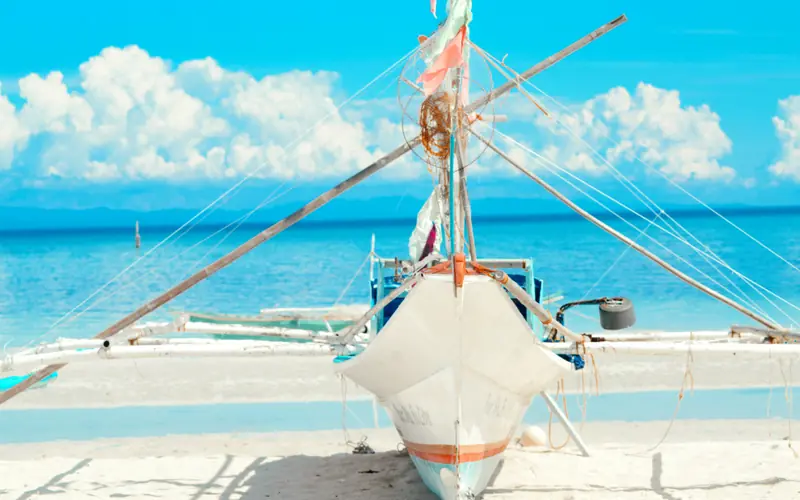
The best time to visit Cebu is the dry season, roughly December to May, when days are sunny and the sea is calm for island hopping. January to April is the sweet spot, and January adds the huge Sinulog festival. June to November is greener, quieter and better value, with warm rain that usually falls in short bursts.
Read the guide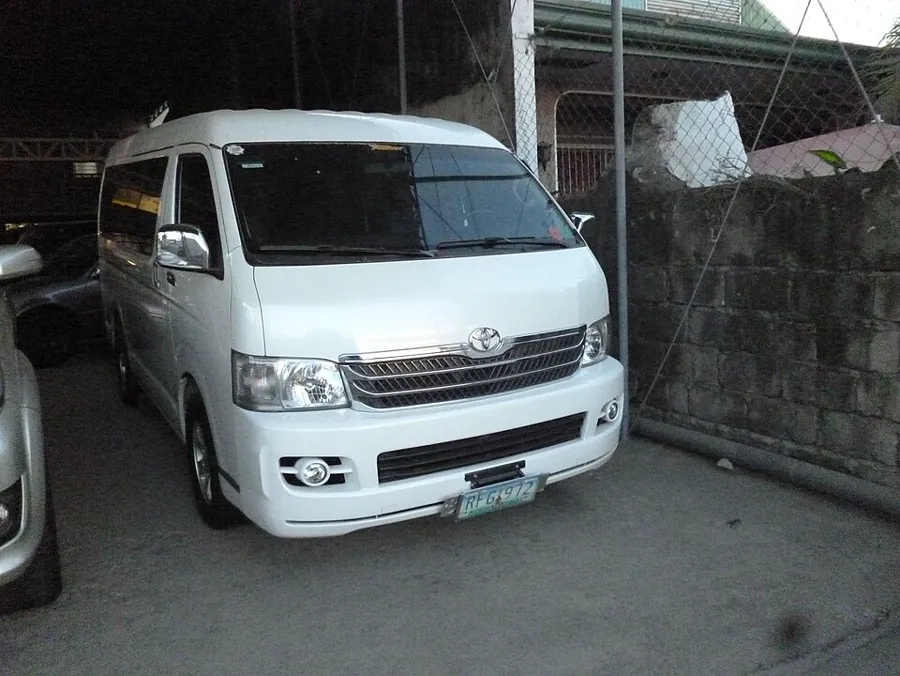
Getting around Cebu
Within Metro Cebu (the city, Mandaue and Mactan) you can use Grab ride-hailing, metered taxis, jeepneys and modern buses. For the airport run, day trips to the south (Oslob, Kawasan, Moalboal) and getting to the northern ports for the islands, most visitors are far more comfortable in a private car with a driver: one fixed price, met on arrival, door to door, and free to stop where you like. Ceres buses and vans are the cheap option for long hauls, and the islands are reached by ferry from Cebu City or the northern ports.
Read the guide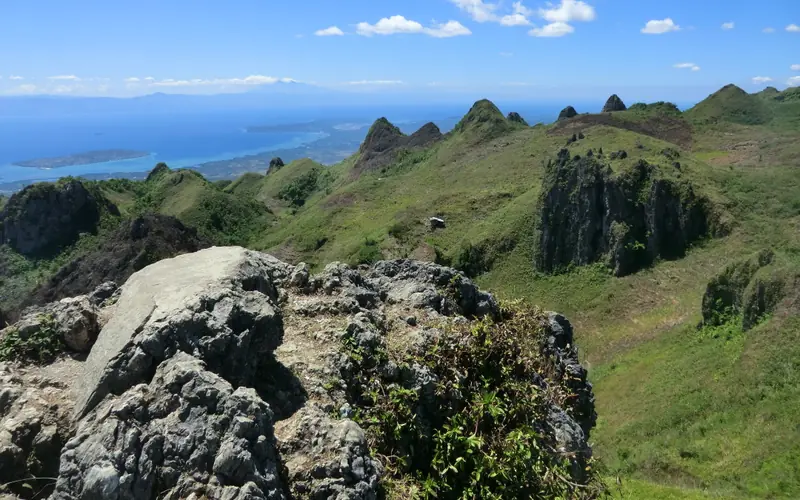
Cebu itinerary (3, 5 or 7 days)
Five to seven days is the sweet spot for Cebu: enough time for Cebu City, the famous southern day trips (Oslob whale sharks, Kawasan Falls and the Moalboal sardine run) and a beach island like Bantayan or Malapascua. Three to four days covers the city plus one or two big day trips. Ten days or more lets you add Bohol, Dumaguete or Siquijor. Because the best sights are spread right down the coast and across to other islands, most visitors pick one or two bases and use a private car and driver for the airport run, the long day trips and the island transfers.
Read the guide
Cost of a private driver in Cebu
A private car and driver in Cebu is priced per trip or per day as one fixed, all-in figure agreed before you travel, not by a meter. What you pay depends mainly on the distance, how long you need the car, the vehicle size, and any ferry, toll or parking costs along the way. The simplest way to know your exact price is to send your route and dates and get a free, no-obligation quote.
Read the guide
Cebu airport transfers
Mactan-Cebu International Airport (airport code CEB) sits on Mactan Island, linked to Cebu City by three bridges. On arrival your options are a pre-booked private car and driver who meets you in arrivals, a metered airport taxi, a Grab ride-hail, an inexpensive MyBus airport shuttle to the SM malls, or your hotel’s own transfer. The Mactan beach resorts are about 15 to 30 minutes away; Cebu City and IT Park are roughly 30 to 45 minutes in normal traffic and longer at peak. For a fixed price with someone waiting at the exit, especially after a long or late flight or with family and luggage, book a private airport transfer in advance and get a free quote from Cebu.travel.
Read the guide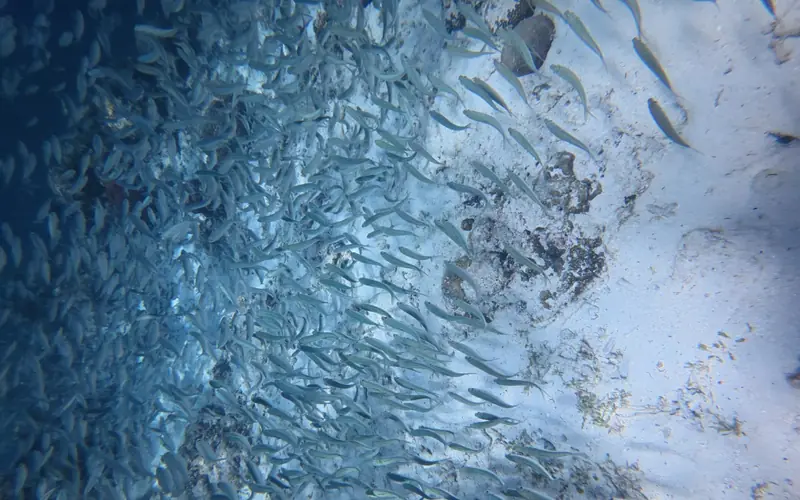
Where to stay in Cebu
Where to stay in Cebu depends on your trip. For a beach-resort holiday, base yourself on Mactan Island by the airport. For city life, shopping, food and nightlife, stay in Cebu City around Ayala/Cebu Business Park or IT Park. For diving, waterfalls and whale sharks, stay on the south coast at Moalboal, Badian, Oslob or Alcoy. For a quiet island beach, choose Bantayan or Malapascua in the north. Many visitors split their stay between two of these.
Read the guide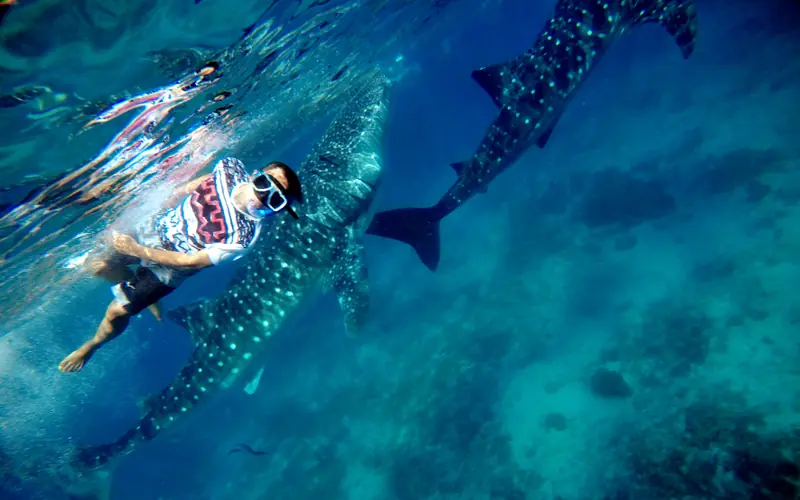
Oslob whale sharks
The whale sharks are at Tan-awan in Oslob, on Cebu’s far south coast, about a three-hour drive from Cebu City. Watching runs only in the morning, from 6am to about noon, and sightings are near-guaranteed because the sharks are hand-fed by licensed fishermen. That daily feeding is exactly why the activity is ethically debated: research shows it changes the animals’ natural behaviour. Rules are strict (no touching, keep four metres back, no sunscreen, 30 minutes in the water), and the honest wild alternative is Donsol in Sorsogon. Arrive by 6-7am for the calmest water and smallest crowd.
Read the guide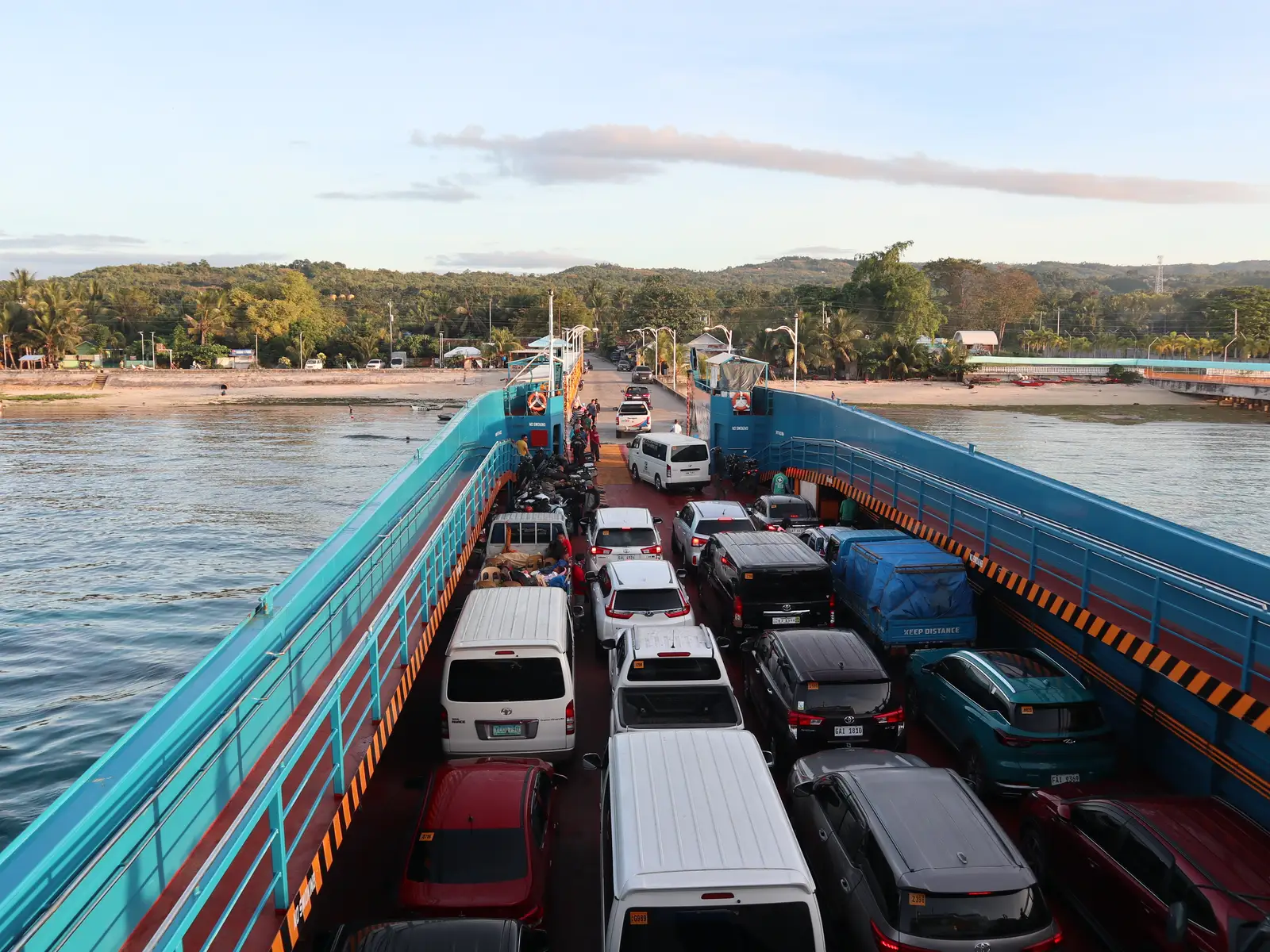
Cebu to Negros ferry: times, fares & crossings
Two RORO ferry crossings link south Cebu with Negros Oriental: Liloan (Santander) to Sibulan, right beside Dumaguete, and Bato (Samboan) to Tampi, a little further up the Negros coast. Maayo Shipping sails the Liloan-Sibulan crossing nine times a day in each direction, first trip 4:30 AM and last trip 10:30 PM, and the regular passenger fare was ₱120 when we last verified it in July 2026; a passenger-only fast craft also works the same corridor in roughly 20 to 30 minutes. Expect a fuel surcharge on top of that base fare: MARINA Advisory No. 2026-15 raised the cap on fuel-related surcharges from 20 to 30 percent on 30 March 2026, so Philippine ferry fares now move with fuel, which is why no two websites quote the same Cebu to Negros price. We re-checked this page on 28 August 2026 and say below exactly what we could and could not confirm. The Bato-Tampi crossing has a timetable here too as of 10 September 2026 - the seven daily departures each way that every published schedule agrees on.
Read the guide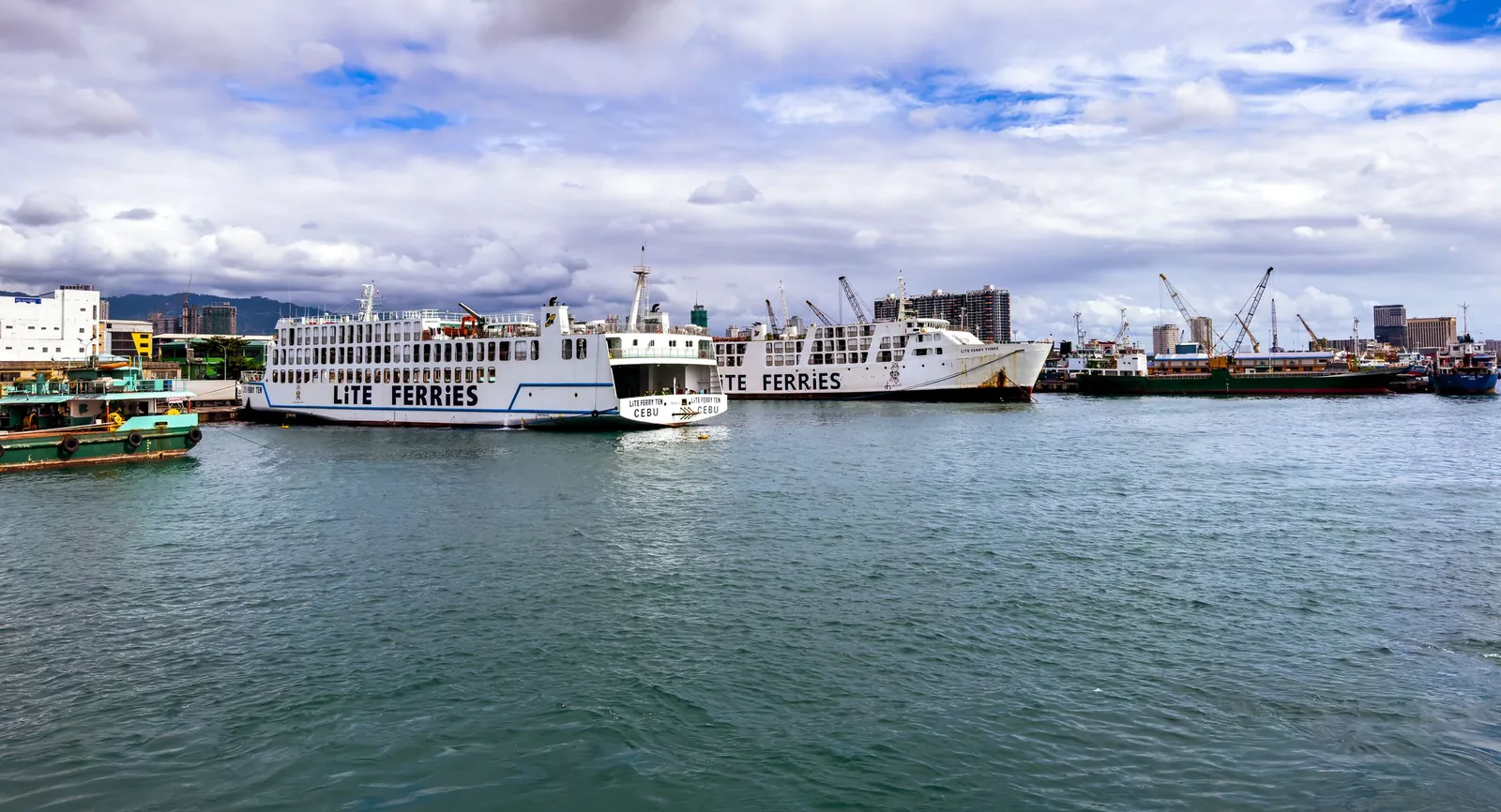
Cebu to Bohol ferry
The fastest way from Cebu to Bohol is the OceanJet fast ferry from Cebu City Pier 1 to Tagbilaran: about two hours across, with ten departures a day from 7:00 AM to 5:40 PM, roughly one an hour. The timetable below is the operator’s own, re-checked in September 2026. Cebu.travel arranges the private transfer from your hotel or Mactan-Cebu airport to Pier 1, timed to your sailing, so the Cebu-side leg runs to the clock; the ferry ticket itself is a separate public fare you buy from the operator.
Read the guide
Is Cebu safe to visit?
Yes. Cebu is one of the most popular and welcoming tourist regions in the Philippines, and the vast majority of visitors have a smooth, friendly trip. It sits in the Central Visayas, well away from the parts of Mindanao that some governments flag in their travel advice. The main things to plan for are everyday ones: petty pickpocketing in crowded spots, busy and sometimes chaotic roads, typhoon season from around June to November, and normal sea and sun precautions. Simple habits handle almost all of it, and travelling by a pre-arranged private car with a local driver takes the biggest variable, the roads, off your plate.
Read the guide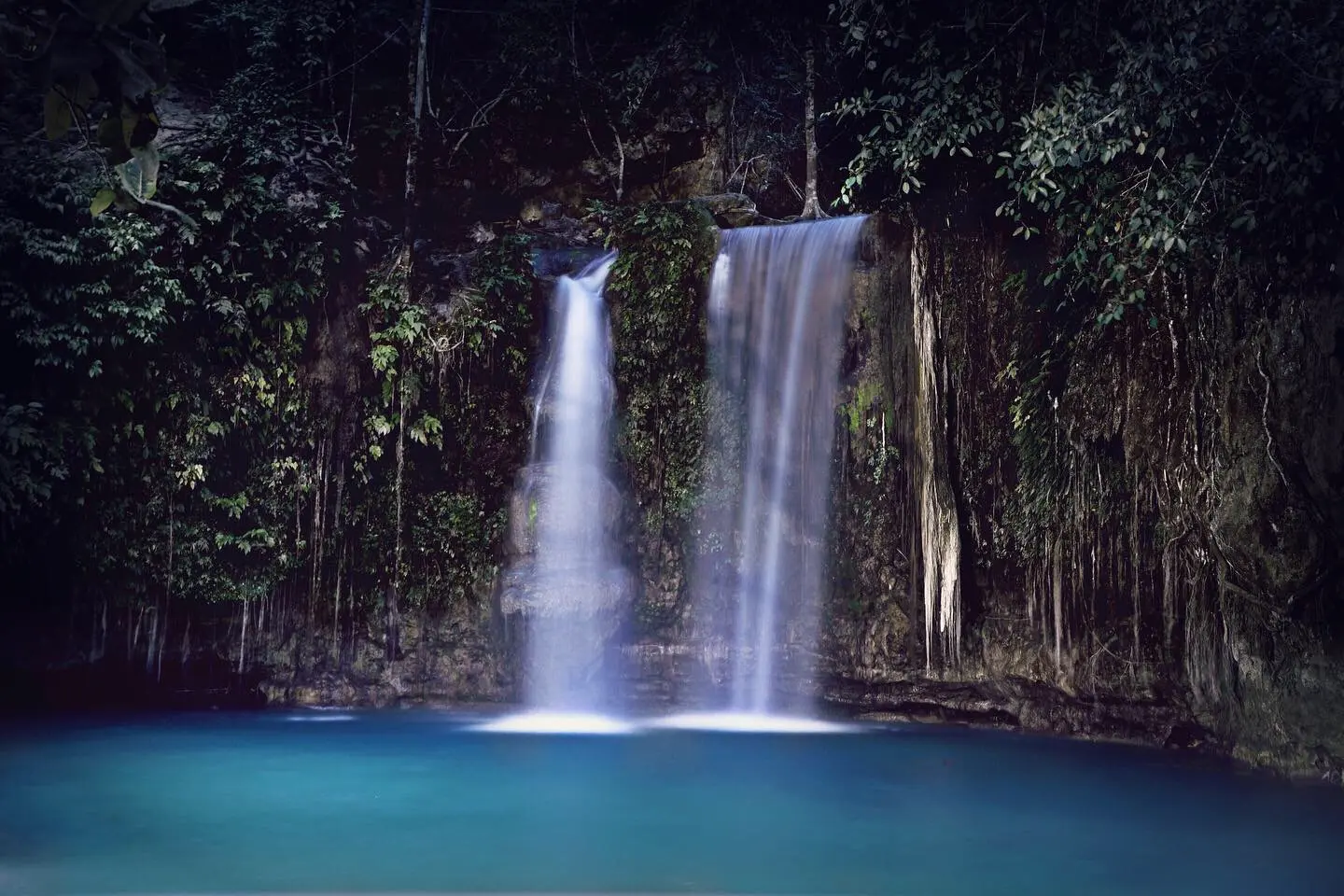
Kawasan canyoneering
Kawasan canyoneering is a guided descent of the Kanlaob River canyon in Alegria that ends at the turquoise pools of Kawasan Falls in Badian, on Cebu’s south-west coast, about a three-hour (roughly 120km) drive from Cebu City. It runs most of the day, takes around three to four hours in the water, and mixes cliff jumps, natural rock slides and swims through bright-blue water. It is only done with an accredited local guide, who supplies a helmet and life jacket; every jump has a lower ledge or a walk-around, so nervous jumpers and non-jumpers can still do the full route. Go early, in the dry season if you can, and never enter the canyon after heavy rain. Because it is a long way south and the early slot is the best one, most people book a private car and driver for the day.
Read the guide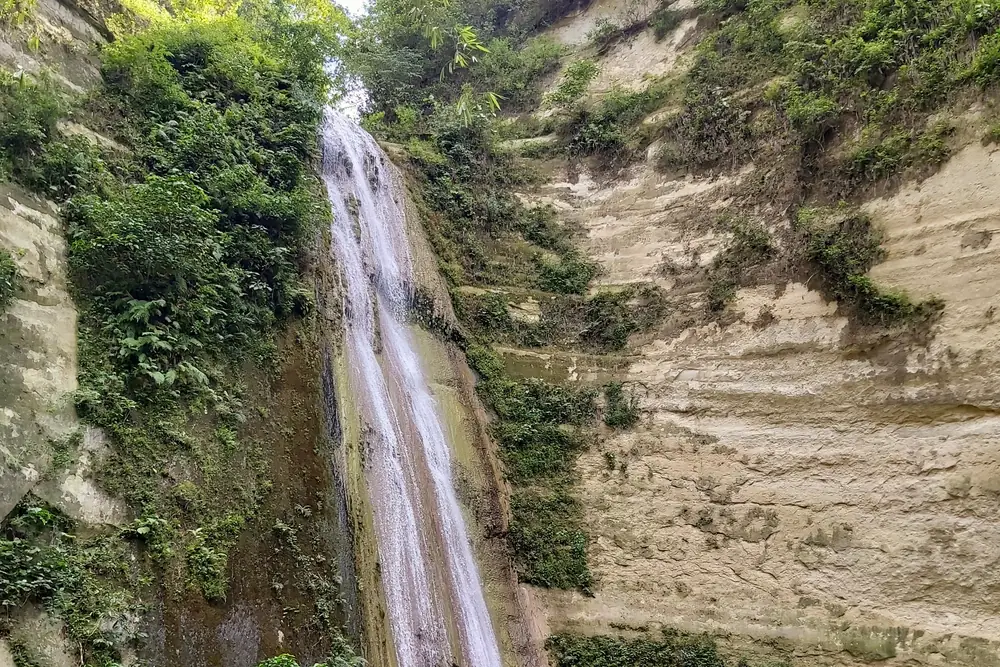
Dao Falls, Samboan
Dao Falls is a waterfall in Samboan, on Cebu’s far south-west coast, past Badian and Moalboal, roughly four hours (about 150km) from Cebu City. Unlike Kawasan, there is no canyoneering course, no cliff jumps and no guided descent to book: a short riverside walk of thirty minutes to an hour brings you to the falls and a swimmable pool at the base. It suits travellers who want a real Cebu waterfall and a quiet swim without the crowds, gear or jumps of canyoneering.
Read the guide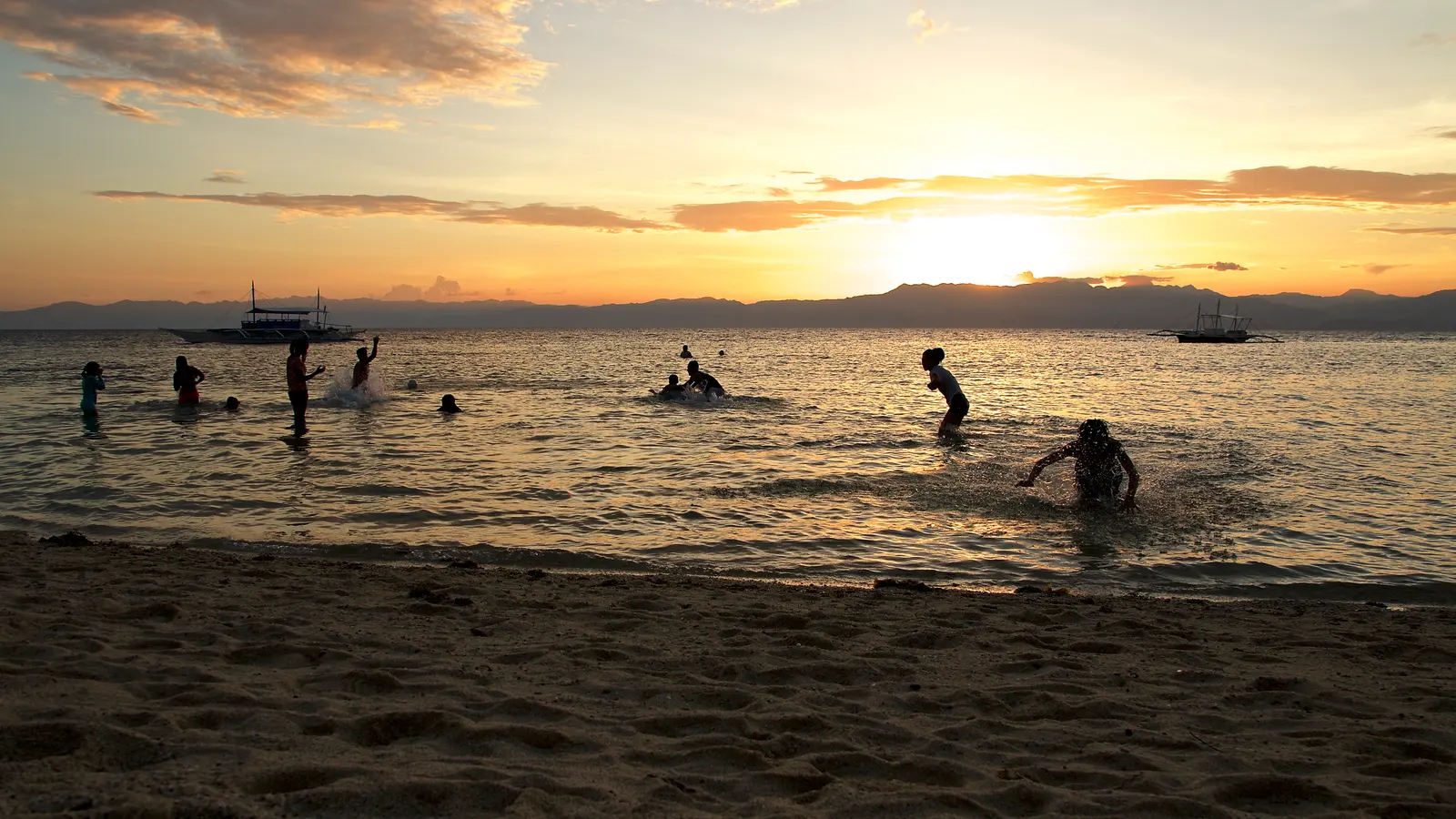
Cebu honeymoon itinerary
A well-loved Cebu honeymoon route links three south-coast highlights over four days with one private car and driver: Moalboal, for the sardine run and a slow beach base; Kawasan or Dao Falls, both with an easy option that skips the canyoneering crowds if you just want a swim; and Oslob, for an early whale-shark morning, before continuing home or on to Bohol by ferry. One driver for the whole loop means no bus timetables, no changing vehicles with your bags, and the freedom to linger wherever you like.
Read the guideSouth Cebu in 2 days
The three headline sights of south Cebu sit in a line down the coast, so a 2-day loop with one private car and driver is the honest way to do them without rushing. Day 1: leave Cebu City before dawn for the Oslob whale sharks, then drive the coast to Kawasan Falls and overnight in Moalboal. Day 2: swim the Moalboal sardine run and turtles in the morning, then drive back to Cebu City. One driver for both days, with no bus changes, is what makes the timings work.
Read the guide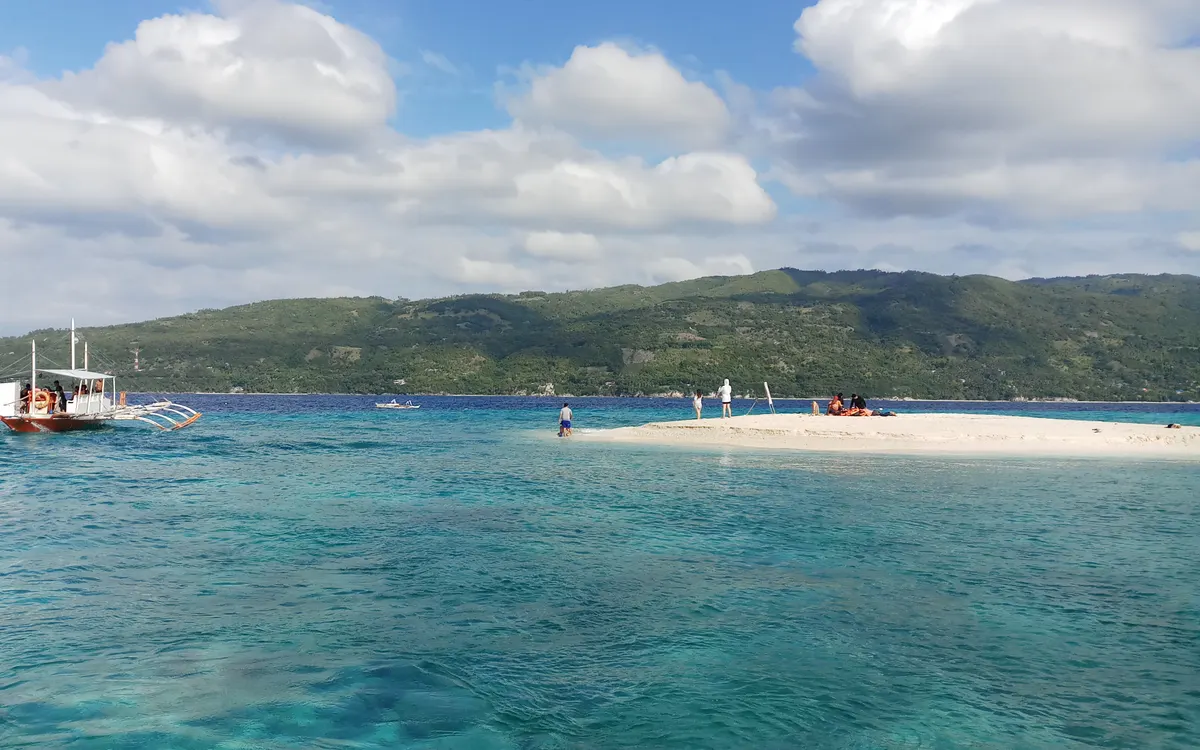
South Cebu in 3 days
Three days is the sweet spot for south Cebu if you want the headline stops without turning the trip into one long drive. Day 1: leave Cebu City before dawn for the Oslob whale sharks, then add Tumalog Falls and, if you want, the Sumilon sandbar before overnighting on the south-east coast. Day 2: cross the southern tip to Kawasan Falls, then continue a short final stretch to Moalboal for the night. Day 3: snorkel the Moalboal sardine run and turtles, add Pescador Island or White Beach if you like, then drive back to Cebu City or the airport. One private car and driver for the whole loop is what keeps it easy.
Read the guide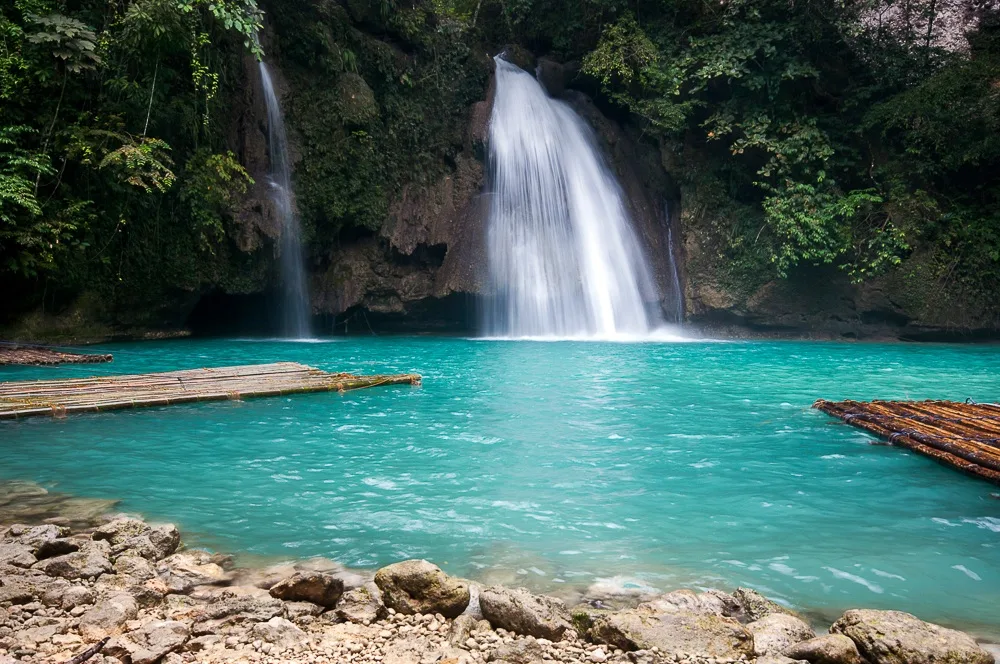
Things to do in Cebu
Cebu packs a lot into one province: swimming with whale sharks in Oslob, the sardine run and sea turtles at Moalboal, canyoneering to the turquoise pools of Kawasan Falls, white-sand island escapes on Bantayan and Malapascua, the jagged ridge of Osmena Peak, and a compact city of heritage churches, temples and famous lechon. Most of the headline sights sit two to four hours south or north of the city, so the trick is grouping them by area and giving yourself five to seven days. It is well worth visiting, and because the best experiences are spread out, a private car and driver for the long days is what turns a scattered map into an easy trip.
Read the guideBantayan Island guide
Bantayan Island sits off the north-west tip of Cebu, and you reach it by road plus one ferry: a roughly three-and-a-half to four-hour drive from Cebu City or the airport up the north-west coast to Hagnaya port in San Remigio, then a car or passenger ferry across to Santa Fe on the island, which takes about an hour. Santa Fe is where the powder-white beaches, the island-hopping boats and most of the resorts are. It is a flat, slow, beach-first island best given two or three nights rather than day-tripped, and because the drive to the port is long and the ferry runs to a timetable, the easy way to do it is a private car and driver that gets you to Hagnaya in time for a sailing.
Read the guide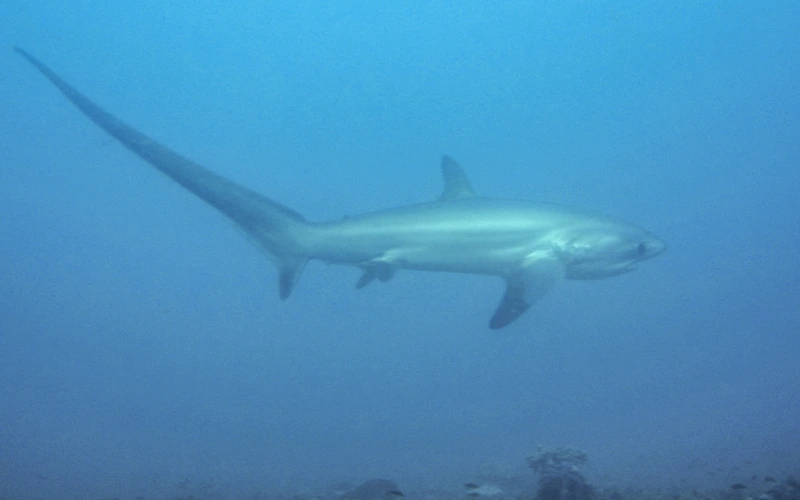
Malapascua thresher sharks
Malapascua is a small island off the northern tip of Cebu, and it is the one place in the world where you can reliably dive with pelagic thresher sharks almost every morning, at a deep cleaning station called Monad Shoal. Getting there is a road-plus-boat trip: a roughly four to four-and-a-half hour drive north from Cebu City (a little longer from the airport) to New Maya port in Daanbantayan, then a short outrigger-boat crossing of about thirty to forty minutes to the island. The thresher dive is a pre-dawn, deep scuba dive for certified divers only, so you need to be on the island the night before, which makes Malapascua an overnight trip rather than a day out. Because the last boat leaves Maya at 5:00 PM and the drive is long, the easy way to do it is a private car and driver timed to reach Maya in good time for a boat - counting back, that means leaving Cebu City by about 1:00 PM, or clearing arrivals at Mactan by about midday, to make the island the same day.
Read the guideMoalboal sardine run & turtles
Moalboal is a small town on Cebu’s south-west coast, about 90 kilometres from Cebu City, and it is home to one of the most reliable snorkelling spectacles in the Philippines: a permanent “sardine run”, a swirling wall of millions of fish that sits just off Panagsama Beach, close enough that you swim straight out to it from shore with no boat needed. Green sea turtles graze the same shallows most days. The drive from Cebu City is roughly two-and-a-half to three hours by private car (a little longer and about 100 kilometres from Mactan-Cebu Airport, including the bridge off Mactan), or three to four hours by public Ceres bus. Because it is snorkel-from-the-shore rather than a scheduled boat, Moalboal works beautifully as a day trip, and it pairs naturally with a Pescador Island boat or Kawasan Falls an hour further south.
Read the guide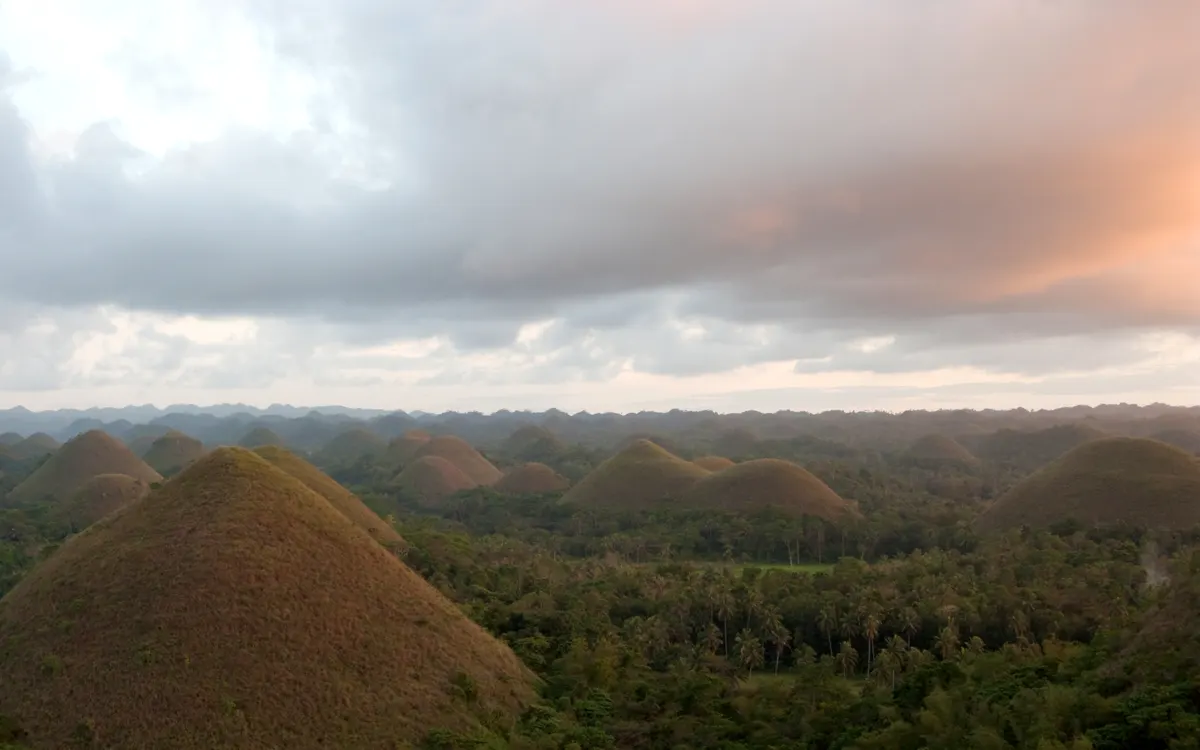
Cebu to Bohol day trip
Yes, you can day-trip to Bohol from Cebu, but it is a long day and most people are happier staying a night. Bohol is a separate island reached by a fast ferry from Cebu City Pier 1 to Tagbilaran, a crossing of about two hours each way, so a day trip means roughly four hours at sea plus a countryside tour squeezed in between an early sailing out and a late one back. In a single day you can realistically see the Chocolate Hills, the tarsiers and a Loboc River lunch cruise on a condensed “countryside loop”; adding Panglao’s beaches or an island-hopping boat to Balicasag really needs an overnight. Cebu.travel arranges the private transfer from your hotel or the airport to Pier 1, timed to your sailing, so the Cebu-side logistics run to the clock. The ferry fare and any Bohol land tour are separate legs.
Read the guideCebu + Dumaguete itinerary
Yes, and it is one of the easiest island pairings in the Philippines. A short fast-craft crossing links Liloan at the southern tip of Cebu with Sibulan, right beside Dumaguete on Negros, in roughly 20 to 30 minutes, so you can enjoy the headline south Cebu days (Oslob whale sharks, Kawasan canyoneering, the Moalboal sardine run) and then hop across to Dumaguete for Apo Island, the Valencia waterfalls and Siquijor. Give it 6 to 8 days, fly into Cebu and out of Dumaguete (or the reverse) so you never backtrack, and let one driver on each island handle the road legs and the pier timing.
Read the guide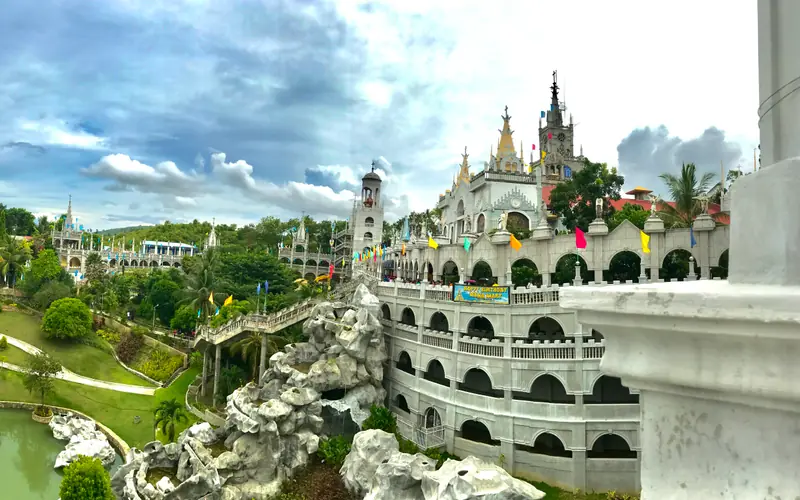
Simala Shrine guide
Simala Shrine - formally the Monastery of the Holy Eucharist, also known as the Our Lady of Lindogon Shrine and commonly searched for as Simala Church - is a striking castle-like Catholic church in Barangay Lindogon, Sibonga, about 55 km south of Cebu City, roughly a 1.5 to 2 hour drive. It is one of the province’s most-visited pilgrimage sites, known for its turreted, cathedral-like architecture, quiet gardens and the many handwritten thank-you letters visitors leave behind. Entry is free (donations welcome), modest dress is expected since it is an active place of worship, and weekday mornings are calmest, since weekends and the 13th of every month bring much heavier pilgrim traffic on the southern highway. Most visitors pair it with Carcar’s heritage streets and lechon on the way back.
Read the guide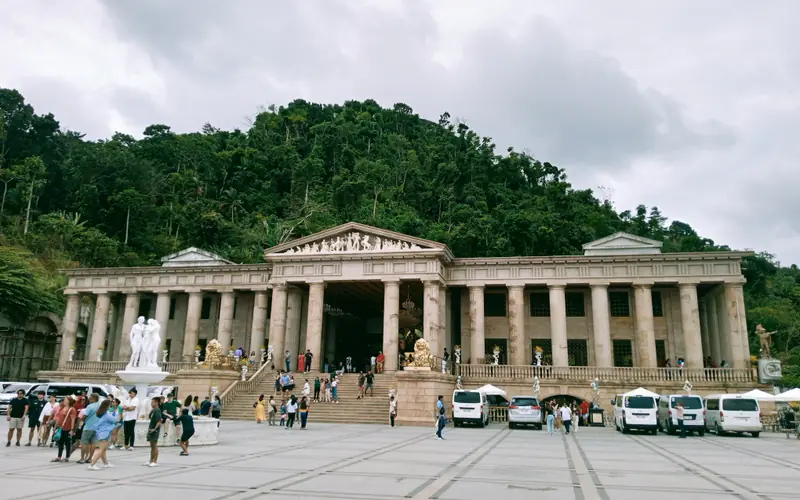
Cebu highlands guide
The Busay highlands above Cebu City hold three sights close together: Temple of Leah, a grand colonnaded monument with sweeping views; Sirao Flower Garden, bright terraced flower fields nicknamed “Little Amsterdam”; and Tops, a ridge-top lookout over the city and Mactan that is especially good at sunset. They sit roughly 8-15 km and 30-45 minutes up from the city centre on steep, winding roads with no direct public transport linking them, so most visitors do all three as one private half-day loop, timed for a late-afternoon finish at Tops for sunset.
Read the guideOsmeña Peak hike guide
Osmeña Peak, near Mantalongon in Dalaguete, is Cebu’s highest point and its most photogenic hike: a ridge of jagged, grassy "shark-tooth" hills with sea views on both sides, about 100 km south of Cebu City, roughly a 2.5 to 3 hour drive by private car. Despite the dramatic scenery the walk is short - roughly 700 m and 20-30 minutes each way from the Mantalongon jump-off, usually done with a local guide - but it is a genuine climb over grass and exposed limestone rather than a viewpoint you drive to. Most visitors arrive before dawn for the classic sunrise over the peaks, and the dry season (roughly February to May) gives the clearest views. It pairs naturally with Kawasan Falls or Oslob for a full south-Cebu day, and since there is no public transport link to the trailhead itself, most visitors go by private car or a Ceres bus plus habal-habal.
Read the guideSumilon Island guide
Sumilon Island is a small island just off Oslob on Cebu’s south-east coast, known for a bright white sandbar that shifts shape with the tide and a protected marine sanctuary with clear-water snorkelling. It’s about 120 km and 3 to 3.5 hours by private car from Cebu City to the Oslob area (roughly 125 km and 3.5 to 4 hours from Mactan-Cebu Airport), then a short banca ride from the Bancogon jetty across to the island. Because that’s the same drive as the Oslob whale sharks, Sumilon is almost always visited as an add-on to that trip rather than on its own, usually with Tumalog Falls folded in too. Dry season, roughly March to May, gives the calmest water and the clearest sandbar. The island is privately run by Bluewater Sumilon Island Resort and there is no public boat: day visitors reserve a day-use pass in advance and cross on the resort’s own scheduled boat, which runs from Bangcogon at 8:00 AM, 10:00 AM, 12:00 noon, 2:00 PM and 4:00 PM and back at 9:00 and 11:00 AM, 1:00, 3:00 and 4:30 PM, with the pass covering transfers between 8:00 AM and 3:00 PM.
Read the guideCebu vs Bohol, Boracay & Palawan
Cebu is the strongest all-round base for a Philippines trip: whale sharks, canyoneering, hiking, food, a real city and its own international airport, all in one province. Bohol is a two-hour ferry away, no flight needed, and is the easiest add-on, best known for the Chocolate Hills and tarsiers. Boracay and Palawan (El Nido and Coron) are beach-and-lagoon specialists reached by a direct flight from Cebu, best treated as a dedicated leg of a longer trip rather than your base. If your time is limited, start in Cebu and add Bohol by ferry; if you have more than a week, fly on to Boracay or Palawan afterwards.
Read the guide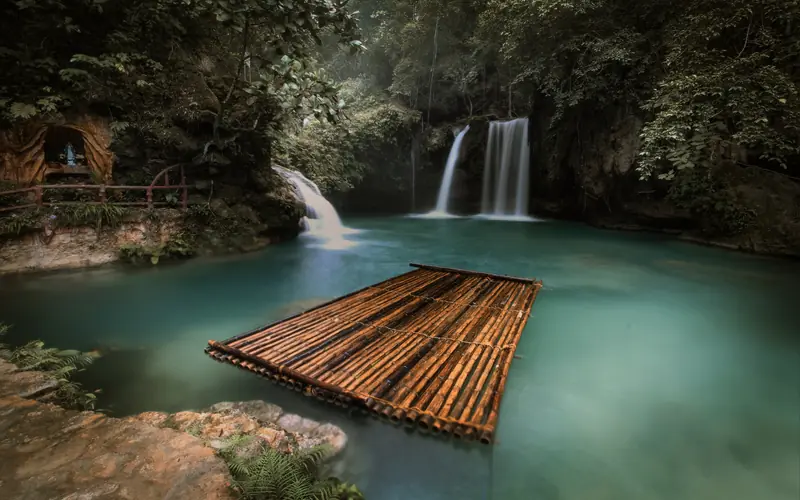
Cebu vs Siargao
Cebu and Siargao are built for different trips. Cebu is the all-round base: whale sharks, canyoneering, diving, hiking and a real city, all reachable by road from one international airport. Siargao is the Philippines' surfing capital, a smaller, slower island built around Cloud 9 and lagoon-hopping, reached by a roughly 50-minute direct flight from Cebu. If you want variety and easier logistics, choose Cebu; if you specifically want to surf or want a laid-back island week, add Siargao as its own leg.
Read the guideCebu vs Manila
It depends on which part of the Philippines your trip is actually built around. Manila (NAIA) is the country's primary international gateway, with the widest range of long-haul and international routes, but it sits at the northern end of the country, a further flight or a long drive from the whale sharks, waterfalls and islands most Cebu-bound visitors come for. Mactan-Cebu International Airport (MCIA) is the Philippines' second-busiest airport and sits right in the middle of the Visayas, so if your trip is Cebu, Bohol, Negros, Siargao or the central islands, flying directly into Cebu skips a domestic connection entirely. If Manila-specific sights or your only affordable international routing point you there, fly in and take the roughly 1 hour 20 minute domestic hop down to Cebu.
Read the guideCebu waterfalls guide
Cebu’s waterfalls sit almost in a line down the south-west coast, and they get wilder the further you go. Kawasan Falls in Badian is the famous one, with canyoneering and a big turquoise swim basin. Past it, Cambais Falls in Alegria is a climbable stack of turquoise pools, Inambakan Falls in Ginatilan is the tall one at about 100 feet, and Samboan alone has three: Dao Falls (quiet and swimmable), the five-tier Aguinid Falls, and Binalayan Hidden Falls. Tumalog Falls sits on the other coast near Oslob and is the natural add-on to a whale-shark morning, though its last stretch is too steep for a car and is covered by habal-habal or on foot. Kawasan and Tumalog work as day trips from Cebu City; the deep-south three sit 145 to 150km out and are really an overnight.
Read the guide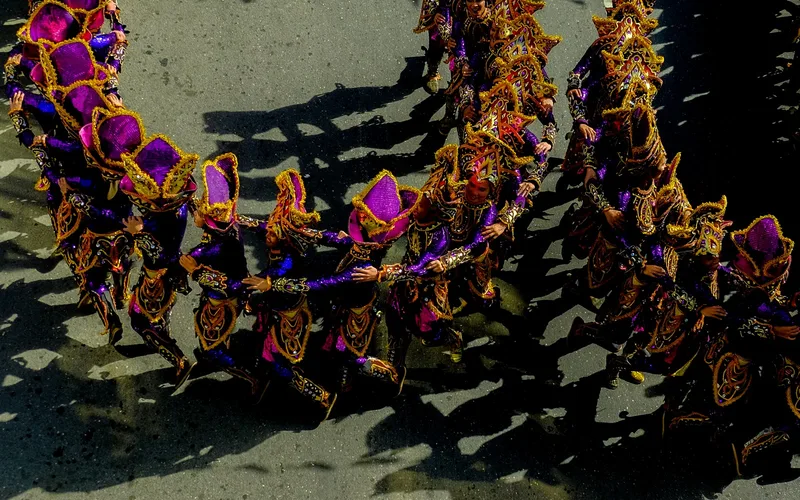
Christmas & New Year in Cebu
Yes. Mid-December through the Sinulog festival weekend in January is Cebu’s busiest stretch of the year: it sits inside the island’s dry season, and on top of that, Filipinos working abroad or in Manila travel home for the holidays, resorts and popular restaurants fill up, and Cebu City gets busier still for Sinulog itself. None of that changes how a private transfer works, you still get one fixed, all-in price agreed before you travel, but it does mean booking earlier than you would for a quieter month, since your first-choice pickup time or vehicle size is more likely to already be taken the longer you leave it.
Read the guide
Camotes Islands guide
The Camotes Islands sit off Cebu’s north-east coast, and you reach them by road plus one ferry: drive north to Danao City port, about 35 km and 1 to 1.5 hours from Cebu City (or 30 to 40 km, 45 minutes to 1.5 hours from Mactan airport), then take the Danao to Consuelo roll-on-roll-off ferry across to Poro Island, which takes around 2 to 2.5 hours. From Consuelo it is a further stretch across the causeway to the beaches and resorts around Santiago Bay on Pacijan. There are four sailings a day each way - 5:30 AM, 8:30 AM, 2:30 PM and 5:30 PM - and nothing at all between the morning and afternoon boats, which is why Camotes rewards at least one night rather than a day trip and why a private car timed to your sailing takes the guesswork out of the road leg.
Read the guide
Siquijor island guide
There are four ways from Cebu and they are nothing like each other in length. Fastest is the direct flight: Sunlight Air has flown Mactan-Cebu to Siquijor non-stop since 15 December 2025, about 55 minutes, a few days a week. Next is OceanJet's daily passenger fastcraft, which leaves Cebu, calls at Tagbilaran in Bohol and carries on to Siquijor town port in roughly 4 to 4.5 hours on one ticket - no vehicles. Third is the overnight RORO: Lite Ferries from Cebu Pier 3 to Larena, 1:00 PM on Monday, Wednesday and Saturday, docking about 11:00 PM, and this is the one that carries a car. Fourth is the classic overland route via Dumaguete - drive down Cebu's east coast to Liloan port at Santander (about 150 km and 3.5 to 4.5 hours from Cebu City, or 165 km and 4 to 5 hours from Mactan airport), the 20 to 30 minute fast craft to Sibulan, then a Dumaguete-to-Siquijor fast ferry of 45 minutes to an hour - which is still the best one if you want Oslob or Moalboal on the way. Most visitors stay at least one night regardless, because the island is best seen on a slow loop of its coastal road: Cambugahay Falls, the old Balete Tree, Salagdoong and Paliton beaches, and the coral-stone church at Lazi.
Read the guide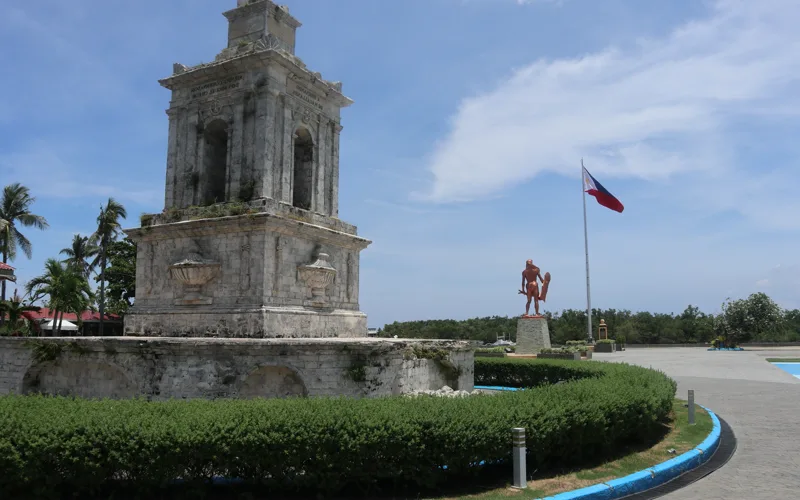
Lapu-Lapu Day & Mactan Shrine
Yes. The Mactan Shrine (also called the Liberty Shrine) sits in Punta Engano on Mactan Island, a few minutes from the airport, and is open to visit any day of the year, no special date needed. It marks the site of the 1521 Battle of Mactan, where the Filipino chieftain Lapu-Lapu defeated Ferdinand Magellan’s Spanish forces, and holds both a Lapu-Lapu monument and a Magellan marker. Every 27 April, the anniversary itself, Lapu-Lapu City marks Lapu-Lapu Day with the Kadaugan sa Mactan festival, a re-enactment of the battle at the shrine grounds.
Read the guide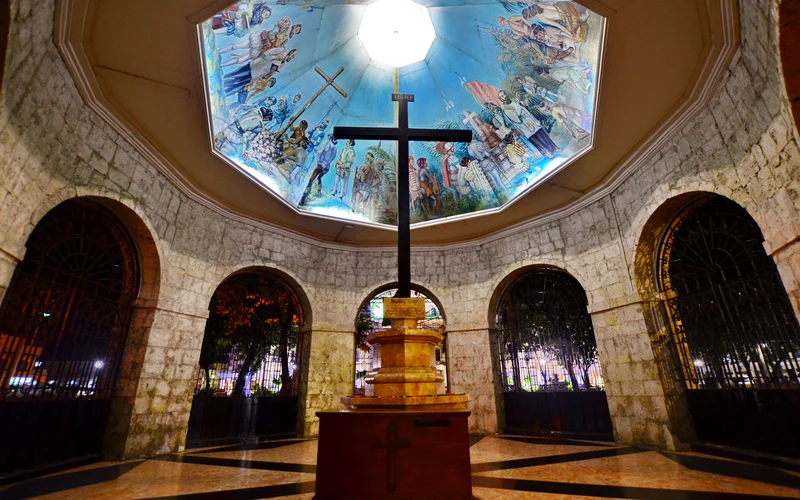
Holy Week in Cebu
Holy Week, Semana Santa in Filipino, falls in March or April and is one of the most solemn weeks on the Philippine calendar. Maundy Thursday and Good Friday are national holidays: many offices, malls and businesses close or run shortened hours, churches hold processions and Bisita Iglesia visits, and roads and ferries get busier with domestic holiday travel. Cebu itself is where Christianity first reached the Philippines in 1521, so the Basilica del Santo Nino and Magellan’s Cross in the city centre are at the heart of the week. Day tours, resorts and private transfers all keep running, so it is a genuine option to visit, it just rewards booking ahead like any other peak week.
Read the guide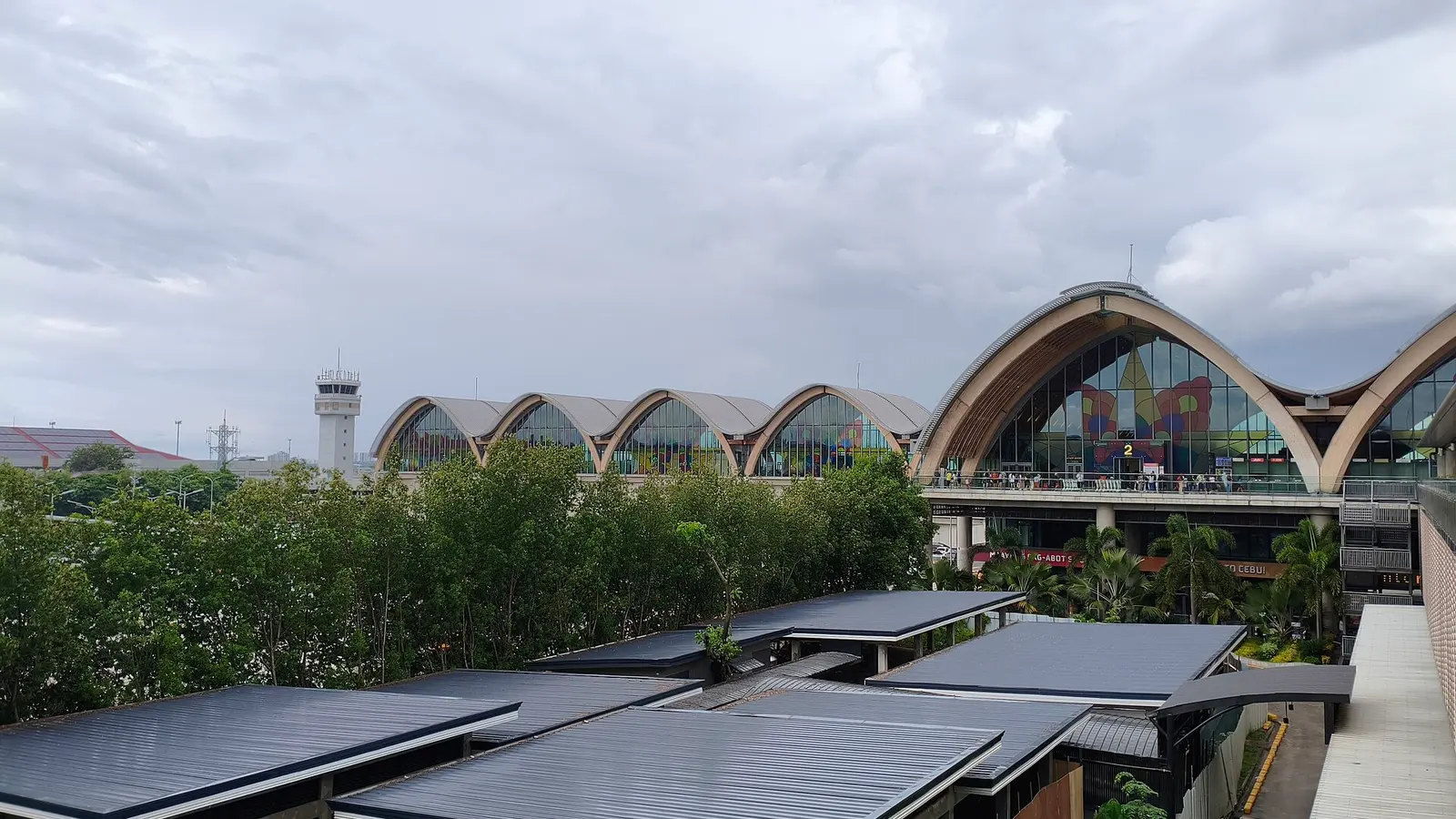
Getting back to the airport
Work backwards from your flight, not forwards from your hotel. Take the drive time back to Mactan-Cebu Airport (about 30-60 minutes from Cebu City, 3-3.5 hours from Moalboal, 3.5-4 hours from Oslob, 4.5-5 hours plus a boat from Malapascua), add any ferry crossing and the wait for it, then add the check-in time your airline states on your booking. On top of that leave a real buffer for the Mactan bridges, which is where late arrivals are actually made or lost. From south Cebu or an island, that usually means leaving the night before or very early in the morning, and it is the single most common way travellers misjudge Cebu.
Read the guideArriving by ferry: pier to anywhere
Cebu City's passenger piers all sit together in the North Reclamation Area on the city's eastern waterfront, part of the Port of Cebu run by the Cebu Port Authority, and your ticket names which pier your sailing uses. From there you are already in Cebu City, so the onward journey is the same road leg as any Cebu City transfer: about 11 to 15 km and 30 to 60 minutes to Mactan-Cebu Airport, roughly 40 km and 1 to 1.5 hours to Carcar, about 90 km and 2.5 to 3 hours to Moalboal, and around 117 km and 3 to 3.5 hours to Oslob. Cebu.travel meets your ferry at the pier with a named driver and a fixed price agreed before you sail, so you walk off the boat and straight into the car with your luggage.
Read the guideWhat size van do you need?
Size the vehicle by whichever number is bigger, your headcount or your luggage pile. Cebu.travel books three models: a Toyota Vios sedan (1 to 3 seats, 2 to 3 bags) for solo travellers and couples, a Toyota HiAce Super Grandia (7 to 9 seats, 6 to 8 bags) for comfort on longer island days, and a Toyota HiAce Commuter (up to 12 seats, 10 to 12 bags) for bigger groups and airport runs carrying a lot of luggage. Above twelve passengers a group travels in two vehicles that keep together on one quote. Tell us your headcount, your bags and your route and we confirm the vehicle and one fixed price before you travel.
Read the guideVisayas dive circuit itinerary
Do it as a one-way loop out of Cebu, in this order: Mactan airport to Moalboal, Moalboal to Bohol, Bohol to Malapascua, then Malapascua back to Cebu City for your flight home. The order is not a matter of taste. Every stop on this circuit is easy to reach except Malapascua, which is reached by an outrigger boat from New Maya port whose last departure is 5:00 PM, and that single cut-off is the only hard deadline on the whole trip. Running the loop this way puts the deadline on an internal leg you control, rather than on an inbound flight you do not. Budget around four days for the movement alone: the moves run roughly 3-3.5 hours, 6-7 hours, a full 9-11 hour travel day, and another 4-4.5 hours plus a boat.
Read the guideCebu with kids
Cebu is a straightforward place to travel with children: English is spoken everywhere, families are welcome in most places you would want to go, and the distances are manageable if you plan around them. The one thing worth sorting before you land is the car seat. Under Republic Act 11229, the Child Safety in Motor Vehicles Act of 2019, a child must be secured in a child restraint system until they are at least 150 centimetres (59 inches) tall and can use the regular seat belt, and no child aged twelve or under may travel in the front seat unless they meet that same height. Arrivals is a bad place to discover that. Tell us your children’s ages, heights and weights when you request a quote and the right seats are in the vehicle before pickup. After that it is mainly a question of drive times: the highlands are 30 to 45 minutes from Cebu City, Carcar is 1 to 1.5 hours, Moalboal is 2.5 to 3, and Oslob and Kawasan are a 3 to 4 hour run each way.
Read the guide