
Cebu to Negros ferry: timetable, fares and which crossing to use, re-checked August 2026
What are the current ferry times and fares from Cebu to Negros, and which crossing should you use?
Short answer
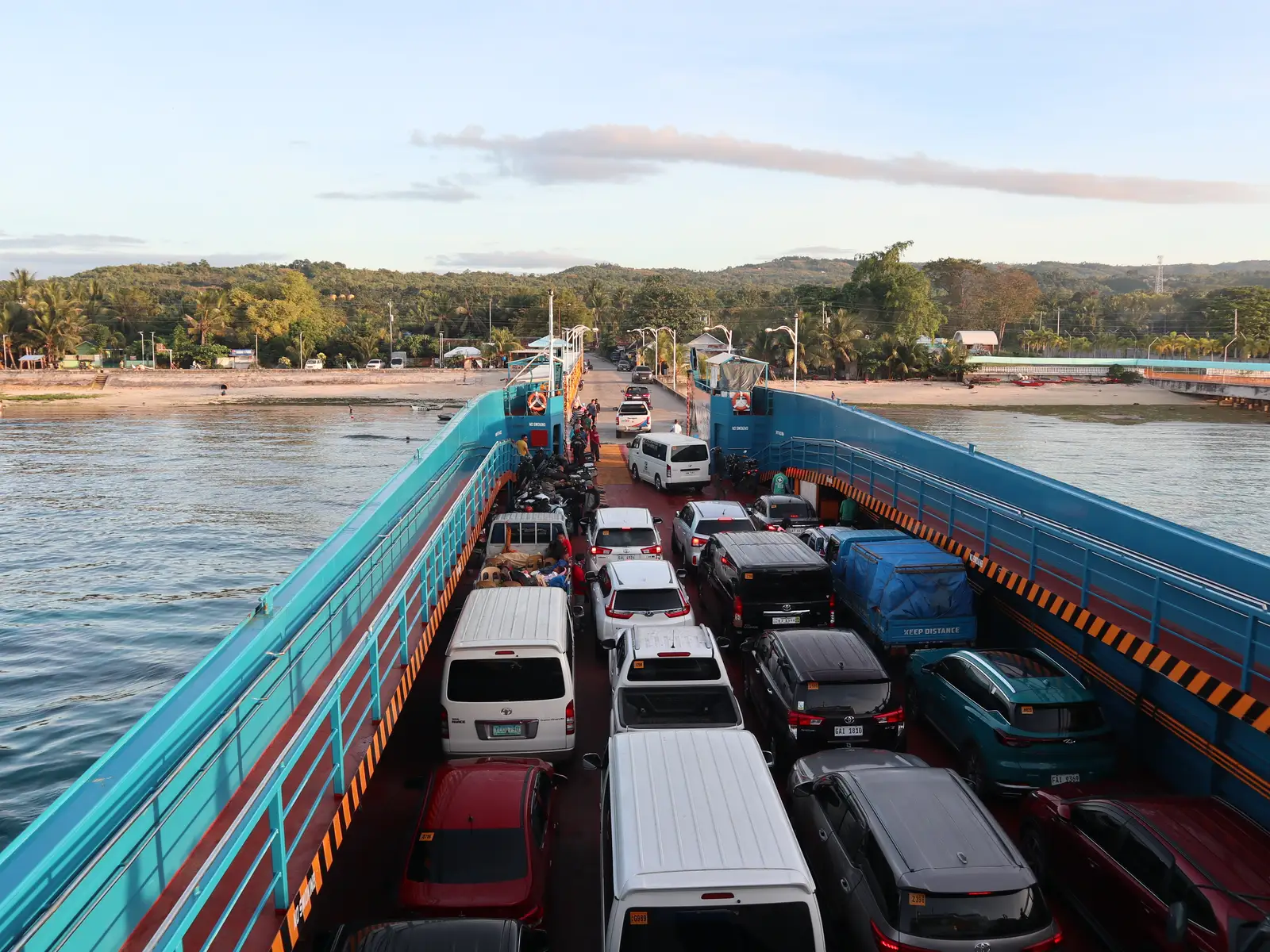
Two RORO ferry crossings link south Cebu with Negros Oriental: Liloan (Santander) to Sibulan, right beside Dumaguete, and Bato (Samboan) to Tampi, a little further up the Negros coast. Maayo Shipping sails the Liloan-Sibulan crossing nine times a day in each direction, first trip 4:30 AM and last trip 10:30 PM, and the regular passenger fare was ₱120 when we last verified it in July 2026; a passenger-only fast craft also works the same corridor in roughly 20 to 30 minutes. Expect a fuel surcharge on top of that base fare: MARINA Advisory No. 2026-15 raised the cap on fuel-related surcharges from 20 to 30 percent on 30 March 2026, so Philippine ferry fares now move with fuel, which is why no two websites quote the same Cebu to Negros price. We re-checked this page on 28 August 2026 and say below exactly what we could and could not confirm. The Bato-Tampi crossing has a timetable here too as of 10 September 2026 - the seven daily departures each way that every published schedule agrees on.
If you have tried to look up the Cebu to Dumaguete ferry online, you have probably found three different timetables on three different sites, most of them out of date. This page exists to fix that: the times and fares below are checked against Maayo Shipping’s own announcements and their live booking portal, and we state the verification date so you know exactly how fresh the information is.
There are actually two crossings from south Cebu, not one, and which you should use depends on how you are coming down the island, and the map and the local advice below sort that out in a minute of reading. The drive south is the long part of the journey; the crossing itself is the easy bit.
Liloan ↔ Sibulan daily departures
Maayo Shipping RORO ferry (carries vehicles and passengers). Nine sailings a day, every day, departure times are the same from both ports in both directions.
- 4:30 AMFirst trip
- 6:00 AM
- 9:00 AM
- 12:00 NN
- 3:00 PM
- 6:00 PM
- 7:30 PMAdded May 2026
- 9:00 PM
- 10:30 PMLast trip
Timetable per Maayo Shipping’s announcement of 1 July 2026 restoring the full regular schedule, cross-checked against their live booking portal on 7 July 2026 and re-confirmed against the operator’s published advisories on 28 August 2026. Sailings can be re-timed or cancelled in rough weather or for maintenance, and this crossing was re-timed repeatedly through 2026, so confirm with the operator close to your travel date.
The two crossings, and which one to use
Liloan (Santander), on Cebu’s south-east tip, crosses to Sibulan, effectively a northern suburb of Dumaguete: the city centre is 15 to 20 minutes from the pier and Dumaguete’s airport is minutes away. Bato (Samboan), around the corner on Cebu’s south-west coast, crosses to Tampi in San Jose, further up the Negros coast road. Both are Maayo Shipping RORO crossings that take cars and motorbikes as well as passengers.
Coming down Cebu’s east side by bus? Cross at Liloan
The Ceres service signed “Bato via Oslob” runs down the east coast through Carcar, Sibonga, Argao, Dalaguete, Boljoon and Oslob and reaches Santander, so ask to be set down at the Liloan wharf rather than staying on to the end of the line. Liloan is the crossing with the verified nine-sailing timetable above, plus a passenger-only fast craft on the same corridor if you are travelling without a vehicle.
Coming down Cebu’s west side by bus? You arrive at Bato
The Ceres service signed “Bato via Barili” is the other one, and it runs down the opposite coast through Barili, Moalboal, Badian, Alegria, Ginatilan and Samboan - about 4.5 to 5 hours from the city to Samboan town - finishing at Bato. Both signboards say Bato, which is why people board the wrong one. Bato to Tampi is the crossing on your doorstep there; if you want the Liloan timetable above instead, the two piers are about a 10-minute tricycle ride apart.
In a private car? Either pier works
A private transfer goes to whichever pier suits your sailing. For Dumaguete itself, Liloan-Sibulan lands you closest, and it is the timetable we have verified. We time the drive down to the boat you want.
Bato-Tampi times and fares
We now print the part of that timetable every source agrees on - seven sailings a day each way - in its own section below. We still do not print its fares: the figures on offer differ by more than double and none of them comes from the operator. See “The Bato-Tampi crossing” below for the times and the caveats.
Travelling light? There is also a fast craft
A passenger-only fast craft runs Liloan-Sibulan in about 20 to 30 minutes. No vehicles, for a car or motorbike you want the RORO timetable above.

The Bato-Tampi crossing: the seven sailings every source agrees on
This is the other Cebu-Negros crossing, and until now this page told you we could not give you its timetable. That was true as far as it went - the published schedules disagree about how many boats run - but it threw away the part they agree on. Maayo Shipping runs Bato in Samboan across to Tampi in San Jose as a RORO carrying vehicles as well as passengers, about 30 minutes across, with the same departure times in both directions.
Four sources publish a timetable for it. One, the only one carrying a 2026 revision date, lists seven sailings a day. The other three list fifteen - in an identical list that the oldest of them has been publishing since January 2023, so that is one schedule republished three times rather than three confirmations of it. What settles it is that the seven are a strict subset of the fifteen: every source contains all seven of the times below, and they differ only over whether eight further sailings run between them. Those seven are the floor, the boats every published schedule says exist, and there may well be more when you get there.
The seven corroborated departures, both directions
5:00 AM, 8:00 AM, 10:30 AM, 2:00 PM, 5:00 PM, 8:00 PM and 11:30 PM - the same times from Bato and from Tampi. Plan around these. The further 4:00 AM, 6:30 AM, 9:30 AM, 11:30 AM, 12:30 PM, 3:30 PM, 6:30 PM and 9:30 PM sailings appear on three other sites but not on the most recently updated one, so we would not build a connection on them.
The gap matters more than the last boat
Nothing in the corroborated set leaves between 10:30 AM and 2:00 PM. If the extra sailings are not running that day, a missed 10:30 AM costs three and a half hours at the pier rather than one - which is the reason to glance at the posted board when you arrive at Bato rather than assuming the next boat is soon.
Its last boat is an hour later than Liloan’s
Bato-Tampi’s last corroborated sailing is 11:30 PM against 10:30 PM at Liloan-Sibulan, and its first is 5:00 AM against 4:30 AM. For a late run down Cebu’s west coast, Bato is the crossing that stays open longer, and that is the one case where it beats the timetable at the top of this page outright.
Where it lands you, and why that usually decides it
Tampi is in San Jose, roughly half an hour up the Negros coast road from Dumaguete, where Sibulan is 15 to 20 minutes from the city centre. For Dumaguete itself, Apo Island or the Dauin dive resorts, Liloan-Sibulan is still the crossing to take. Bato-Tampi wins when you are already coming down Cebu’s west coast through Moalboal and Alegria, when you are heading north on Negros towards Bais or Tanjay, or when you are travelling late.
Still no fares, and that part has not changed
The same four sources quote the regular passenger fare at three figures more than double apart, and not one of them is the operator. The MARINA fuel surcharge explained further down this page applies to this crossing exactly as it does to Liloan-Sibulan. Buy at the counter, read the notice posted at the pier, and treat any fare you find online for it - including a figure we might have printed - as unverified.
Fares: the base fare, and the surcharge on top of it
Regular passenger base fare: ₱120
Verified live on Maayo Shipping’s booking portal on 7 July 2026. That is the base fare, and a fuel surcharge may be added to it at the counter (see the section below). Pay at the pier ticket counter, or when booking online.
Why we have not changed that number in August 2026
On 28 August 2026 we could not re-verify the fare at source: Maayo Shipping’s booking portal now sits behind an account login, so the live price is no longer publicly readable. Third-party ferry sites currently quote ₱130, ₱190 and ₱200 for this crossing, all with different dates attached, so we are not going to pick one and call it verified. The ₱120 above is the last figure we saw on the operator’s own portal, and we have dated it rather than quietly refreshed it.
Discounted fares
Discounts exist for eligible passengers (students, senior citizens and PWD are the standard categories on Philippine ferries), but we have not verified the current amounts. Bring a valid ID and confirm at the counter.
Vehicles and motorbikes
Vehicle rates change more often than passenger fares and we have not verified the current amounts. Check directly with Maayo Shipping before travelling with a car or motorbike.
Why every website quotes you a different fare
Search this crossing and you will be told it costs ₱120, ₱130, ₱190 or ₱200. None of those sites is necessarily lying, and the fare is not really the number any of them printed. A Philippine ferry ticket is a base fare plus a fuel surcharge, and through 2026 the surcharge has been the part that moves.
The rule behind it is public. MARINA, the Maritime Industry Authority that regulates domestic shipping, caps how much of a fuel-related surcharge an operator may add. MARINA Advisory No. 2026-15, signed on 30 March 2026, raised that ceiling from 20 percent to 30 percent nationwide, one of the measures taken when global fuel prices spiked, and MARINA said at the time that the adjustment is temporary and subject to mandatory downward adjustment when prices ease. Cebu operators moved within days: Lite Ferries, Roble Shipping and Aznar Shipping each announced an additional 10 percent fuel surcharge effective 3 or 4 April 2026, and Maayo Shipping re-timed this very crossing from 16 March 2026, citing changes in fuel surcharges in its own advisory.
The surcharge is meant to come off again when fuel prices normalise, and whether it has is being argued in public. After prices fell, the Cebu Provincial Board passed a resolution in June 2026, authored by Board Member Andrei Duterte, urging MARINA 7 to review surcharges still being charged, following a similar request from the San Francisco Municipal Council on 12 May 2026. So the number can fall as well as rise, and a fare copied off a blog in March is not the fare you will pay in September.
What you will actually pay at the counter
The base fare, plus whatever fuel surcharge is in force on the day, plus a terminal fee, which is collected separately at the port and is not part of the ferry ticket. Bring more small cash than the headline fare suggests.
Where to find the real current number
Operators must notify MARINA and the public at least three days before putting an increase into effect, by publication or by posting the notice in ports, terminals, vessels and their official platforms. That means the authoritative current fare is on a printed notice at Liloan and Sibulan piers and on the operator’s own channels, not on a travel blog. It is worth a glance at the posted notice when you buy.
Overcharging is a regulated offence, not a local custom
MARINA has said it monitors these adjustments and that any form of overcharging will be met with administrative fines and sanctions. If a counter price looks far off the posted notice, the posted notice is the one that counts.
What this means for the car we quote you
It is the reason we quote rather than publish a price list. When you accept a quote from us for the drive down to Liloan, that is the figure for your trip, agreed before you travel and not moved afterwards. The ferry ticket itself is yours to buy at the pier and moves with the surcharge, so we tell you what the base fare was when we last checked instead of pretending it is fixed.
How to book
Tickets are sold at the pier on the day, and for most mid-day crossings that is all you need. Maayo Shipping also runs an online booking portal at book.maayoshipping.com. When we checked on 28 August 2026 the portal required an account login before it would show sailings and prices, where it had previously been readable without one, so treat it as a booking tool rather than a way to look up today’s fare. It is still worth booking ahead for the first and last boats of the day, or whenever your onward plans depend on making a specific crossing.
Getting to the port (the Cebu side is the long part)
Cebu City or Mactan to Liloan port (what we arrange)
The drive down Cebu’s east coast to Liloan port at Santander is roughly 150 km from the city and takes about 3.5 to 4.5 hours (4 to 5 from the airport), through Carcar, Argao and Oslob. We time the run to the sailing you want, with a comfortable buffer, and you can break the journey with a whale-shark morning at Oslob on the way.
The Negros side
From Sibulan pier it is only 15 to 20 minutes into Dumaguete. Our sister site negros.travel arranges the Negros-side transfer, a driver meeting your boat at the pier, and its own verified copy of this timetable lives there too.
Public transport
Ceres buses serve both sides of the crossing, and tricycles cover the short hop between the piers and the nearby towns. It works, it just takes longer and needs more juggling with luggage and boat timings, and it is worth reading the signboard advice above before you board - both southbound services are signed for Bato and they take opposite coasts.
Why so many ferry timetables online are wrong
Schedules on this crossing genuinely change. In May 2026 Maayo Shipping ran a reduced timetable for several weeks, then restored the full nine-sailing schedule from 1 July 2026. Any page written during the reduced period, and any page that copied one, now lists boats that do not sail, and pages older than that miss the current times entirely.
That is why this page tells you when it was last verified and against what. When the operator changes the schedule, we update the table and the date rather than leaving a stale copy online.
Frequently asked questions
How long is the ferry from Cebu to Dumaguete?
The passenger-only fast craft from Liloan (Santander) to Sibulan takes about 20 to 30 minutes; the vehicle-carrying RORO sails the same short strait and takes somewhat longer. The drive down Cebu to Liloan port is the long part of the journey, so allow around 3.5 to 4.5 hours from Cebu City, or 4 to 5 from Mactan airport.
Why does every website give a different Cebu to Negros ferry fare?
Because a Philippine ferry ticket is a base fare plus a fuel surcharge, and the surcharge moves. MARINA, the regulator for domestic shipping, caps how much operators may add, and it raised that ceiling from 20 percent to 30 percent in Advisory No. 2026-15 on 30 March 2026 when global fuel prices spiked. Several Cebu operators added 10 percent within days, and Maayo Shipping re-timed the Liloan-Sibulan crossing on 16 March 2026 citing changes in fuel surcharges. MARINA says the increase is temporary and subject to mandatory downward adjustment, and in June 2026 the Cebu Provincial Board formally asked MARINA 7 to review surcharges still being charged after prices fell. So a fare published at any point in 2026 may be right for its date and wrong for yours. The authoritative current figure is the notice posted at the pier, which operators must publish at least three days before any increase.
How much is the ferry from Liloan to Sibulan?
The base passenger fare was ₱120 when we last verified it on Maayo Shipping’s booking portal in July 2026, and a fuel surcharge is added on top of that at the counter, plus a separate terminal fee at the port. Philippine ferry surcharges are capped by MARINA, which raised the ceiling from 20 to 30 percent in March 2026, and they move with fuel prices, which is why other sites quote anything from ₱130 to ₱200 for this crossing. Operators must post any increase publicly at least three days ahead, so the notice at Liloan or Sibulan pier is the authoritative current price. Discounted fares exist for students, seniors and PWD with valid ID; the current amounts vary, so confirm at the counter.
What time are the first and last ferries?
The first sailing is 4:30 AM and the last is 10:30 PM, with nine sailings a day in each direction, per the full regular schedule Maayo Shipping restored on 1 July 2026 and which we re-confirmed on 28 August 2026. Departure times are the same from both Liloan and Sibulan. This crossing was re-timed several times earlier in 2026, so check the operator’s current advisory if your plans depend on the first or last boat.
Do I need to book the ferry in advance?
For most crossings you can simply buy a ticket at the pier. Booking ahead on Maayo Shipping’s online portal makes sense for the first and last sailings of the day, and whenever a flight or tour on the other side depends on a specific boat.
Which company operates the Liloan to Sibulan ferry?
The timetable on this page is Maayo Shipping’s RORO ferry schedule for Liloan-Sibulan, verified in July 2026 and re-confirmed against the operator’s published advisories in August 2026. Maayo also runs the Bato-Tampi crossing, and for that one we publish only the seven daily departures every source agrees on rather than a full timetable, because the published schedules differ on whether eight more sailings run. Its fares we do not print at all. Check the operator’s own announcements for the latest advisories before you travel.
Which Ceres bus from Cebu City goes to Liloan port?
The one signed “Bato via Oslob”. Two Ceres services leave the Cebu South Bus Terminal for the same terminus, Bato, by opposite coasts: “Bato via Oslob” runs down the east side through Carcar, Sibonga, Argao, Dalaguete, Boljoon and Oslob and reaches Santander, where the Liloan wharf is, while “Bato via Barili” runs down the west side through Barili, Moalboal, Badian, Alegria, Ginatilan and Samboan. Because both signboards read Bato, it is worth saying “Liloan port” to the conductor as you board.
What time does the Bato to Tampi ferry leave?
Seven departures are corroborated by every schedule we can find, the same times from both ports: 5:00 AM, 8:00 AM, 10:30 AM, 2:00 PM, 5:00 PM, 8:00 PM and 11:30 PM. Maayo Shipping runs it as a RORO taking vehicles as well as passengers, and the crossing takes about 30 minutes. Three other sites list a further eight sailings between those times, but all three print the same list and the oldest has carried it since January 2023, so we would not plan a connection around them. Two things worth knowing: Bato’s last boat at 11:30 PM is an hour later than Liloan-Sibulan’s 10:30 PM, and nothing in the corroborated set sails between 10:30 AM and 2:00 PM. We do not print fares for this crossing - current sources disagree by more than double and a fuel surcharge applies on top.
What if I end up at Bato instead of Liloan?
It is not the disaster it sounds like. Bato port in Samboan is about a 10-minute tricycle ride round the southern tip from Liloan port in Santander. Bato has its own crossing, to Tampi on Negros, a little further up the coast from Dumaguete; Liloan crosses to Sibulan, which is the pier closest to Dumaguete and the one with the nine-sailing timetable on this page.
Is there a direct ferry from Cebu City to Dumaguete?
Slower overnight ferries do run direct from Cebu City port, but most travellers take the faster land-and-short-ferry route: drive down to Liloan at Cebu’s southern tip, then the short crossing to Sibulan beside Dumaguete.