
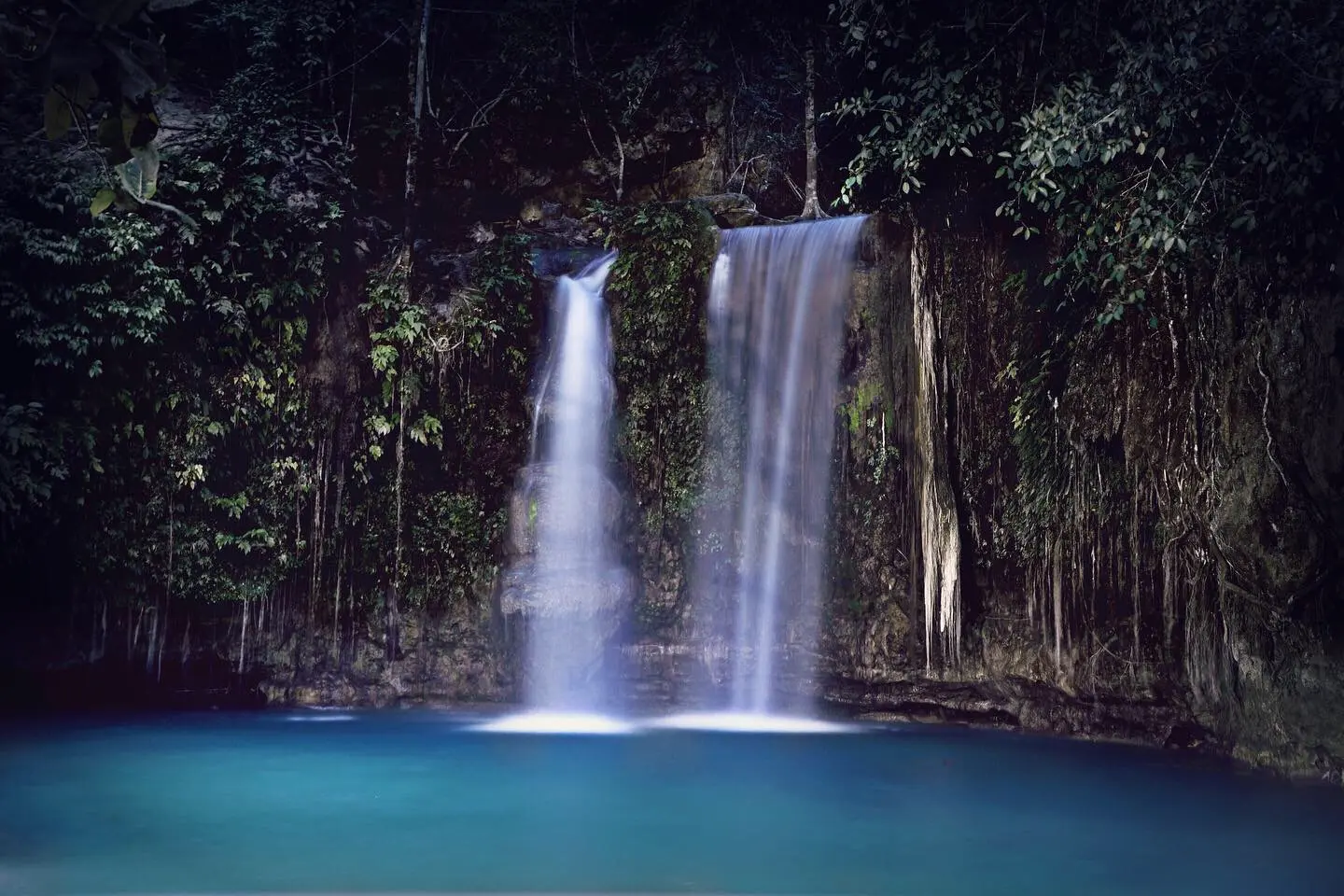
Kawasan canyoneering: an honest how-to guide (route, safety and getting there)
How do I do the Kawasan Falls canyoneering, and is it safe?
Short answer
Kawasan canyoneering is a guided descent of the Kanlaob River canyon in Alegria that ends at the turquoise pools of Kawasan Falls in Badian, on Cebu’s south-west coast, about a three-hour (roughly 120km) drive from Cebu City. It runs most of the day, takes around three to four hours in the water, and mixes cliff jumps, natural rock slides and swims through bright-blue water. It is only done with an accredited local guide, who supplies a helmet and life jacket; every jump has a lower ledge or a walk-around, so nervous jumpers and non-jumpers can still do the full route. Go early, in the dry season if you can, and never enter the canyon after heavy rain. Because it is a long way south and the early slot is the best one, most people book a private car and driver for the day.
Kawasan canyoneering is the single most popular adventure day out in Cebu, and for good reason: you spend a few hours working down a narrow limestone canyon of almost unreal turquoise water, leaping from ledges, sliding down worn rock chutes and swimming through pools, before the river spills out at the tiered falls of Kawasan. This guide covers what it is actually like, how safe it really is, when to go, and the part that trips people up most, the logistics of getting to a trailhead that sits a long way south of the city.
The timing matters more here than for almost any other Cebu trip. The route gets busy, the water is at its clearest and calmest early, and after heavy rain it can be closed on safety grounds with no notice. Getting to the far south-west coast for the first slot means an early start, and that is the part we handle: tell us your dates and we send a fixed-price quote for a private car and driver who collects you early, waits through the whole descent, and can fold in Moalboal or Osmena Peak on the same day.
The quick version
If you only take a few things from this guide, take these.
Where
The route starts in the hills of Alegria and finishes at Kawasan Falls in Badian, on Cebu’s south-west coast, roughly three hours (about 120km) from Cebu City and a little more from Mactan airport.
What it is
A guided three-to-four-hour descent of the Kanlaob River canyon: cliff jumps, natural rock slides and swims through bright-blue water, ending at the falls.
When
It runs through the day, but the first morning slot is by far the best for calm, clear water and thin crowds. An early start from the city is essential, so a pre-dawn or early pick-up is normal.
The catch
It is weather-dependent. In the wet season, or after any heavy rain, the river rises fast and operators suspend the activity. Never argue with a guide who calls it off, and build in a flexible plan.
What the route is actually like
Canyoneering here is a one-way trip downhill with the water. After registering and gearing up at the jump-off in Alegria, your guide leads a small group into the Kanlaob canyon, where you alternate between short walks along the rock, floating and swimming the deeper pools, sliding down smoothed natural chutes, and jumping from ledges into the water below. It finishes at the Kawasan basin in Badian, where you can swim the famous turquoise pools or take a bamboo raft under the main cascade.
It is an organised, well-worn adventure rather than a wilderness expedition: there are numbered groups, a set route, and guides stationed at the trickier spots. That structure is exactly why it is doable for ordinary travellers, and why the early slot matters, because by mid-morning the canyon can be busy with groups backing up at each jump.
The jumps, and who it suits
The cliff jumps are the headline, but they are the part people most misunderstand. Not every jump is compulsory, and they are not all high.
Jumps are optional
Every jump on the standard route has a lower ledge or a walk-around path, so you can take the small drops, skip the big ones, or climb down instead. Nervous jumpers do the whole route all the time.
The heights vary
They range from small ledges up to bigger platforms, with the tallest optional jumps commonly cited at around ten metres. Your guide points out the safe entry each time, and you only jump where and when they say it is clear.
You need to be okay in water
You do not have to be a strong swimmer, as a life jacket is provided and keeps you afloat, but you should be comfortable being in deep water and doing some light scrambling over rock. Reasonable general fitness helps.
Not for everyone
It is not suitable for young children, for anyone who cannot be in water, or with some injuries, heart conditions or during pregnancy. If in doubt, the swim-and-raft visit to Kawasan Falls itself is a gentle alternative with none of the jumps.
Safety, honestly
We would rather set your expectations straight than undersell the risk. Done properly, with an accredited guide and the right conditions, canyoneering here has a strong safety record and the gear and guiding are taken seriously. The real dangers are specific and avoidable.
Always go with an accredited guide
The activity is regulated locally and guides are trained for the route, the water and the jumps. Never attempt the canyon independently or with an unaccredited fixer to save a little money.
Rain is the big one
The Kanlaob is a river in a narrow canyon, so heavy upstream rain can raise the water level and current quickly. Operators suspend the activity when conditions turn, and you should treat any closure as final, not a challenge.
Wear the helmet and life jacket
They are provided for a reason, on rock and in moving water. Keep them on for the whole descent, and follow the guide’s line on every jump and slide.
Footwear and grip
Wet rock is slippery. Closed water shoes or trainers with grip prevent most slips and cuts, and taking your time on the walks matters more than the jumps.
When to go, time of day and time of year
As with the whale sharks further south, the hour you arrive matters more than the month, but the season matters too because this is a water activity in a canyon.
First slot (best)
Arriving for the earliest run gives you the clearest, calmest water and the thinnest crowd, before groups stack up at each jump. This is the main reason an early start is worth it.
Late morning onward
Still enjoyable, but busier and slower, with more waiting at the popular jumps and choppier, churned-up water.
Dry season (roughly December to May)
The safest and most reliable window: lower, clearer water, fewer cancellations and easier driving south. This is the peak time for a reason.
Wet season (roughly June to November)
Greener and quieter, but with a real chance of the activity being called off after rain. If you go in these months, keep your plan flexible and have a backup for the day.
What to bring and how to prepare
Water shoes or grippy trainers
Not flip-flops. You will be walking and jumping on wet rock, so closed shoes you can swim in are the single most useful thing to bring.
A rash guard and quick-dry clothes
You are in and out of the water for hours. A rash guard or swim shirt protects against sun and rock, and quick-dry shorts beat heavy cotton.
A secured action camera, nothing loose
A GoPro-style camera on a wrist or chest strap survives the jumps; phones and loose valuables do not. Most operators offer a photographer or a dry bag, but leave anything you cannot afford to lose in the car.
A little cash for local fees
The canyoneering guide, gear and environmental fees are set locally and paid on the day, so bring pesos. We do not quote or collect these, they go straight to the local operation on arrival.
What to combine it with
Because Badian is a long way south and you are usually finished by early afternoon, it pairs naturally with another south-Cebu highlight on the same day or an overnight nearby. With the same driver waiting, popular combinations are:
Moalboal
About an hour north of Badian, so many people snorkel the sardine run and sea turtles at Panagsama in the morning or afternoon and do the canyon on the other half of the day.
Osmena Peak
Cebu’s highest point, in Dalaguete, is a natural sunrise start before dropping down to the canyon, for a big adventure day.
Oslob whale sharks
Some ambitious itineraries link an early Oslob whale-shark slot on the south-east coast with Kawasan on the way back, though it makes for a very long day; a private car is the only realistic way to attempt it.
Dao Falls, if you want falls without the canyoneering
Further south past Badian, in Samboan, Dao Falls is a genuine waterfall reached by a gentle riverside walk, no guide, gear or jumps required. If canyoneering itself is not what you are after, see our dedicated Dao Falls guide.
Getting there, and why the early start is the hard part
Kawasan and the Alegria trailhead sit on the south-west coast, roughly 120km and a three-to-four-hour drive from Cebu City, a little more from Mactan airport. You can reach it independently, but the logistics are what make or break the day.
The public route is a Ceres bus towards Badian, Bato via Barili, from the Cebu South Bus Terminal, then a short habal-habal motorbike taxi to the trailhead, which is cheap but slow and hard to time for the first slot. A private car and driver is the simplest way to make the early run, come out of the canyon to a waiting vehicle rather than hunting for onward transport, and fold in Moalboal or Osmena Peak without watching a bus timetable. Tell us your dates and group size and we send one fixed price for the whole day.
Frequently asked questions
How do I get to Kawasan Falls canyoneering from Cebu City?
The Alegria trailhead and Kawasan Falls in Badian are about 120km down Cebu’s south-west coast, roughly a three-to-four-hour drive. The simplest way is a private car and driver who gets you there for the early slot and waits through the descent; the budget alternative is a Ceres bus (Bato via Barili) from the Cebu South Bus Terminal followed by a short habal-habal to the trailhead.
Is Kawasan canyoneering safe?
With an accredited local guide, the provided helmet and life jacket, and reasonable conditions, it has a strong safety record. The main risk is weather: the Kanlaob is a canyon river, so heavy rain can raise the water quickly and operators suspend the activity. Never go independently or after heavy rain, always wear the gear, and follow your guide on every jump and slide.
Do I have to do the cliff jumps?
No. Every jump on the standard route has a lower ledge or a walk-around, so you can take the small drops, skip the big ones, or climb down instead. Nervous jumpers complete the full route all the time.
How high are the jumps?
They range from small ledges up to bigger platforms, with the tallest optional jumps commonly cited at around ten metres. Your guide shows you the safe entry point each time and you only jump when they confirm it is clear.
Do I need to be a strong swimmer?
Not a strong one, but you should be comfortable in deep water. A life jacket is provided and keeps you afloat, and guides help at the harder spots. There is some light scrambling over rock, so reasonable general fitness helps.
What is the best time of year for Kawasan canyoneering?
The dry season, roughly December to May, is the most reliable: lower, clearer water, fewer cancellations and easier driving south. The wetter months from about June to November are quieter but carry a real chance of the activity being called off after rain, so keep your plan flexible if you go then.
Can I combine Kawasan canyoneering with Moalboal in one day?
Yes, it is one of the most popular south Cebu day trips. Moalboal is about an hour north of Badian, so with a private car you can do the sardine run and turtles plus the canyon on the same day. Tell us your priorities and we will quote the route.
Is there an alternative if I want a waterfall without doing the canyoneering?
Yes, two options. You can visit the Kawasan basin itself for a swim and a bamboo-raft ride under the main cascade without descending the canyon, or head further south to Dao Falls in Samboan, a quieter waterfall reached by an easy riverside walk with no guide, gear or jumps needed.