
Simala Shrine: an honest guide to visiting Cebu’s famous pilgrim church
How do you visit Simala Shrine in Cebu, and what should you know before you go?
Short answer
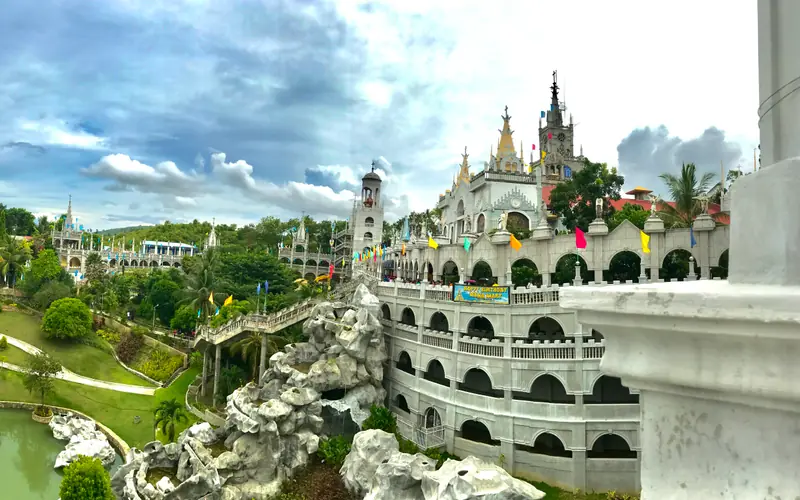
Simala Shrine - formally the Monastery of the Holy Eucharist, also known as the Our Lady of Lindogon Shrine and commonly searched for as Simala Church - is a striking castle-like Catholic church in Barangay Lindogon, Sibonga, about 55 km south of Cebu City, roughly a 1.5 to 2 hour drive. It is one of the province’s most-visited pilgrimage sites, known for its turreted, cathedral-like architecture, quiet gardens and the many handwritten thank-you letters visitors leave behind. Entry is free (donations welcome), modest dress is expected since it is an active place of worship, and weekday mornings are calmest, since weekends and the 13th of every month bring much heavier pilgrim traffic on the southern highway. Most visitors pair it with Carcar’s heritage streets and lechon on the way back.
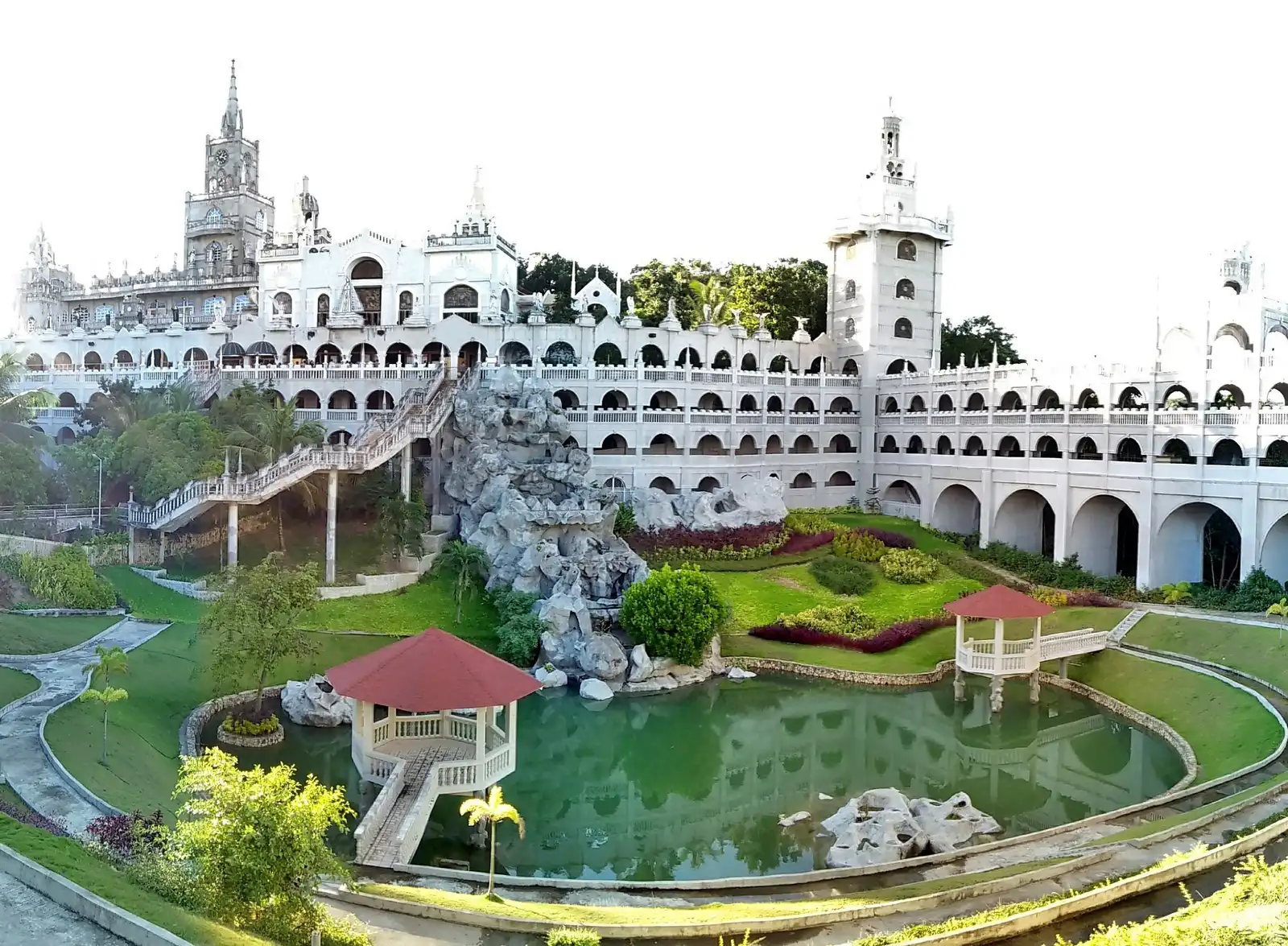
Simala Shrine is the one stop in south Cebu that draws people for reasons beyond sightseeing. Officially the Monastery of the Holy Eucharist, in the hills above Lindogon, Sibonga, it looks less like a typical parish church and more like a small white castle, with turrets, arched arcades and terraced gardens rising above the southern highway. It is one of the most visited religious sites in the province, and while many who come are pilgrims, plenty of others simply visit for the architecture and the view.
This guide covers the practical side of a visit: how far it is and how you get there, what the shrine actually is and why it matters to so many Filipino Catholics, what to expect once you arrive (dress code, free entry, the quiet etiquette of an active church), when to go if you want to avoid the busiest pilgrim crowds, and why Carcar makes such a natural stop on the way back.
Where Simala Shrine is, and how you get there
Simala Shrine sits in Barangay Lindogon, in the municipality of Sibonga, about 55 km south of Cebu City down the southern highway, roughly a 1.5 to 2 hour drive depending on traffic. If you are searching for Simala Church, or for directions to Sibonga rather than Simala, that is the same place: the shrine, the parish church and the Sibonga address all refer to one building. From Mactan-Cebu Airport it is a little further, about 65 km and 2 to 2.5 hours, since you first have to cross to the mainland and work south through the city.
By private car, the drive is straightforward: south on the highway through Carcar, into Sibonga, then a short climb up to the shrine grounds, where your driver can wait while you visit. By public transport, take a southbound Ceres bus from the Cebu South Bus Terminal towards Sibonga, then a habal-habal (motorbike taxi) for the final climb up to the shrine, since the buses run along the highway rather than up the hill.
What Simala Shrine is, and why people visit
Simala is best known for two things at once: its architecture and its reputation. The building itself, with its pale stone turrets, arched cloisters and manicured gardens, is unlike any other church in Cebu, and it photographs beautifully from the approach road below. Inside, the shrine is closely associated with answered prayers, and one of its most striking features is the sheer number of handwritten thank-you letters and testimonies left by visitors over the years, many displayed for others to read.
That reputation is why the 13th of every month draws especially heavy crowds. It is tied to a long-standing devotional pattern among Filipino Catholic pilgrims, and on those days the southern highway noticeably fills with buses, vans and private cars heading to Sibonga. Weekends see a smaller version of the same effect. None of this makes the shrine hard to visit on an ordinary day; it just means the busiest dates are predictable and easy to plan around.
What to expect when you visit
Free entry, dress modestly
There is no entrance fee (donations are welcome), but as an active place of worship, shoulders and knees covered is the expected standard of dress inside.
It is a working church, not a museum
Masses and prayer services run through the day, so keep voices down, silence phones, and be mindful of people who are there to pray, light a candle or leave a letter.
Open to everyone
You do not need to be Catholic, or religious at all, to visit. Many people come purely to see the architecture and gardens, and that is entirely normal here.
A gift and candle area on site
There is a shop area for candles and religious items near the grounds if you want a small souvenir or to take part in the candle-lighting many visitors do.
The best time to go
Weekday mornings are by far the calmest time to visit: light traffic on the drive down, a quiet shrine to look around, and an easy walk through the gardens. If you can, avoid the 13th of the month and weekends, when the combination of pilgrim buses and passing tourist traffic makes both the highway and the shrine grounds noticeably busier. None of this is a reason to skip those dates if that is when you can travel, since the shrine is open and welcoming either way, but if your schedule is flexible, a quiet Tuesday or Wednesday morning is the easiest version of the visit.
Combine it with Carcar
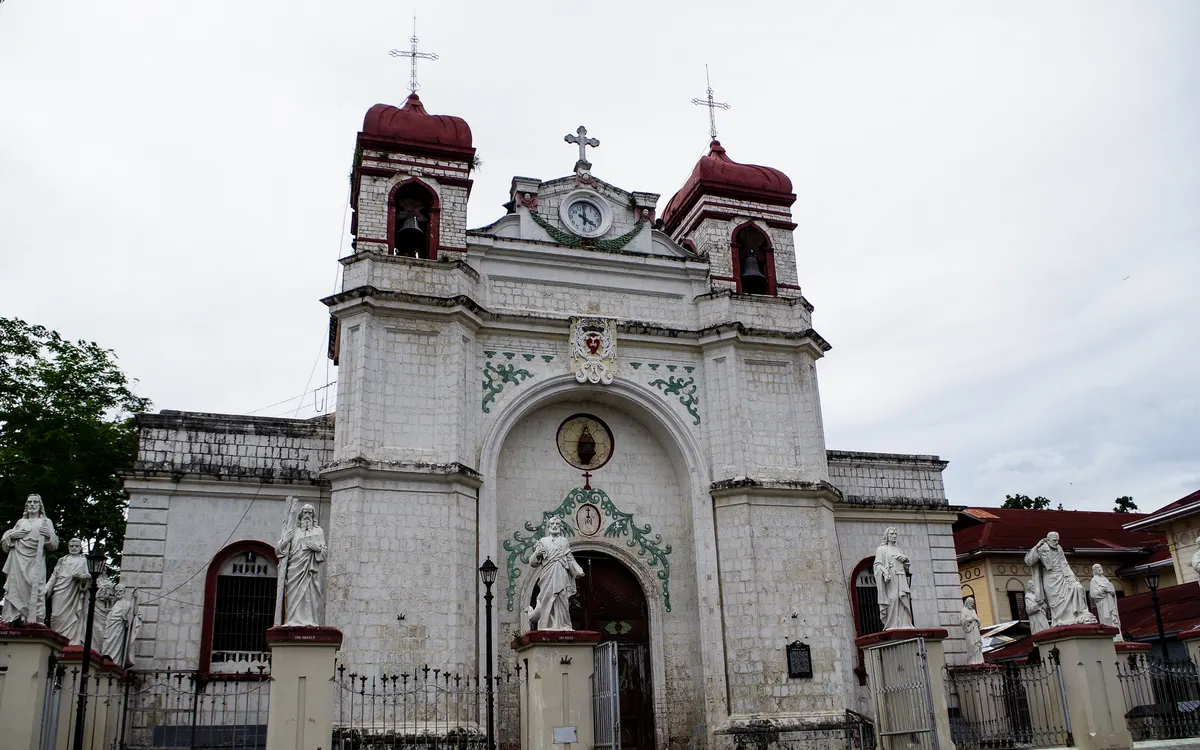
Carcar, a heritage town famous for its Spanish-era plaza, ancestral houses and above all its lechon and chicharon, sits on the same southern highway about 40 km from Cebu City, closer to the city than Simala. Most visitors treat the two as one relaxed south-Cebu outing: the shrine first, then a stop in Carcar’s public market for lechon on the way back, or the reverse if you would rather eat before the drive up.
Because both stops are on the same road and neither takes a full day, they combine naturally into a half-day trip from Cebu City, with time to spare for a slower lunch or a wander through Carcar’s old streets.
Getting there without the stress
The bus-plus-habal-habal route works fine if you have the time, but a private car and driver removes the two fiddly parts: timing the highway drive around pilgrim-day traffic, and the final climb up to the shrine, which a habal-habal handles but a private car simply drives straight up. Tell us your date and whether you would like Carcar added on, and we will quote a fixed half-day price with your driver waiting throughout.
Frequently asked questions
How far is Simala Shrine from Cebu City?
About 55 km south, in Lindogon, Sibonga, roughly a 1.5 to 2 hour drive by private car. From Mactan-Cebu Airport it is about 65 km, around 2 to 2.5 hours.
Is there an entrance fee or dress code at Simala Shrine?
There is no entrance fee, though donations are welcome. As an active place of worship, modest dress (shoulders and knees covered) is expected inside.
Why is Simala Shrine famous?
Two reasons: its castle-like architecture, turrets, arched cloisters and terraced gardens, unlike any other church in Cebu, and its reputation among Filipino Catholic pilgrims for answered prayers, reflected in the many handwritten thank-you letters and testimonies visitors leave behind.
Why is the 13th of the month so busy at Simala?
It follows a long-standing devotional pattern among pilgrims, so the 13th of every month brings noticeably heavier traffic on the southern highway and larger crowds at the shrine than an ordinary day. Weekends see a smaller version of the same effect.
Do you have to be Catholic to visit Simala Shrine?
No. The shrine welcomes all visitors, including those who come simply to see the architecture and gardens rather than to pray. Quiet, respectful behaviour is appreciated since it remains an active church.
Can I combine Simala Shrine with Carcar?
Yes, and most visitors do. Carcar’s heritage plaza and famous lechon are on the same southern highway, closer to Cebu City than Simala, making an easy half-day out of both stops together.