Things to do in Cebu: the best experiences and how to string them together
What are the best things to do in Cebu, and is it worth visiting?
Short answer
Cebu packs a lot into one province: swimming with whale sharks in Oslob, the sardine run and sea turtles at Moalboal, canyoneering to the turquoise pools of Kawasan Falls, white-sand island escapes on Bantayan and Malapascua, the jagged ridge of Osmena Peak, and a compact city of heritage churches, temples and famous lechon. Most of the headline sights sit two to four hours south or north of the city, so the trick is grouping them by area and giving yourself five to seven days. It is well worth visiting, and because the best experiences are spread out, a private car and driver for the long days is what turns a scattered map into an easy trip.
Cebu is one of the most rewarding places in the Philippines precisely because it does not do just one thing. In a single trip you can snorkel beside whale sharks at dawn, drift through a swirling wall of sardines by mid-morning, jump and slide down a limestone canyon to a waterfall in the afternoon, and still have days left for white-sand islands, a mountain sunrise and a plate of the country’s best roast pork. This guide pulls the highlights together and, just as importantly, shows how to group them so you are not criss-crossing the island.
The one thing to understand up front is geography. The airport and city sit in the middle-east of the island, and most of the famous experiences are a two-to-four-hour drive south (Oslob, Moalboal, Kawasan, Osmena Peak) or north (Bantayan, Malapascua). That distance is the whole reason a private car and driver works so well here: you cover the long stretches early and comfortably, string two sights into one day, and skip the bus timetables. Tell us your dates and what you want to see, and we send one fixed-price quote for the driving.
The quick version: Cebu in a nutshell
If you only skim one part of this page, here is the shortlist of what Cebu is best known for.
Wildlife in the water
Whale sharks at Oslob, the Moalboal sardine run and resident sea turtles, and world-class diving at Malapascua (thresher sharks) and around Mactan.
Waterfalls and adventure
Canyoneering the Kanlaob canyon to Kawasan Falls, the turquoise cascades themselves, and the karst ridge of Osmena Peak for sunrise.
Islands and beaches
Bantayan and Malapascua in the north for powder-white sand and slow days, plus Sumilon sandbar and the Camotes off the east coast.
City, heritage and food
Cebu City’s Spanish-era churches and forts, hilltop temples and flower farms, and the lechon (roast pig) the whole country rates as the best.
In and under the water
Cebu’s marine life is the headline for most visitors, and the two big-ticket encounters sit close together on the south coast, so many people do both.
At Oslob, on the south-east coast, you can snorkel beside gentle whale sharks in the early morning; it is a long pre-dawn drive but an unforgettable one, and there is an honest debate about the feeding practice worth reading before you go. An hour across at Moalboal, on the south-west coast, the free sardine run is a swirling silver tornado of millions of fish just off Panagsama Beach, with sea turtles grazing the shallows nearby, all reachable straight from shore. For divers, Malapascua in the far north is famous for near-daily thresher-shark sightings at Monad Shoal, while the reefs and drop-offs around Mactan are the easy option close to the airport.
Waterfalls, canyons and mountains
The south-west of the island is adventure country, built around water and limestone.
Kawasan canyoneering
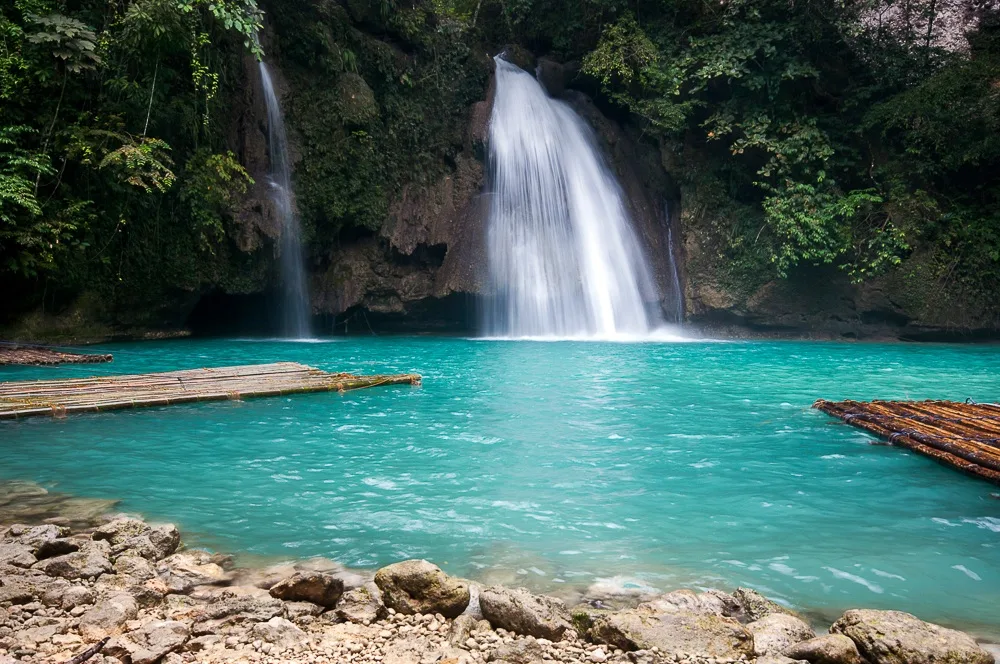
Cebu’s single most-booked adventure: a guided three-to-four-hour descent of the Kanlaob canyon in Alegria, jumping and sliding through bright-blue water, finishing at the tiered pools of Kawasan Falls in Badian.
Kawasan Falls itself
If the jumps are not for you, the falls are a gentle swim-and-raft visit on their own, with the same turquoise water and none of the canyoneering.
Osmena Peak
Cebu’s highest point in Dalaguete, a short climb to a jagged line of karst hills that is a classic sunrise, often paired with a south-coast day.
Tumalog and Aguinid falls
Quieter cascades near Oslob and Samboan that combine neatly with a whale-shark morning on the way back north.
Islands and beaches
For the classic Philippine picture-postcard sand, Cebu’s best beaches are at the two ends of the island rather than in the city.
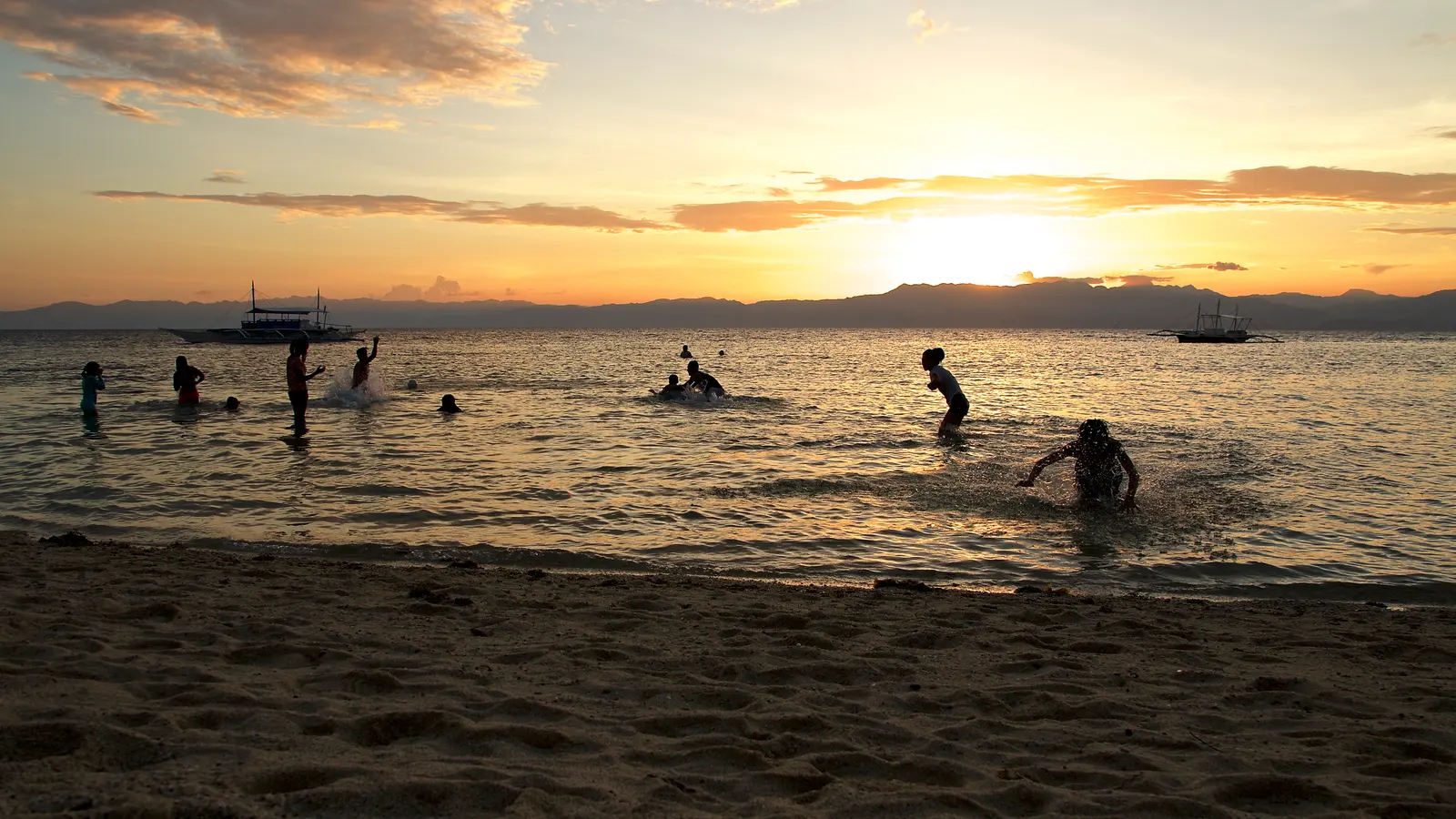
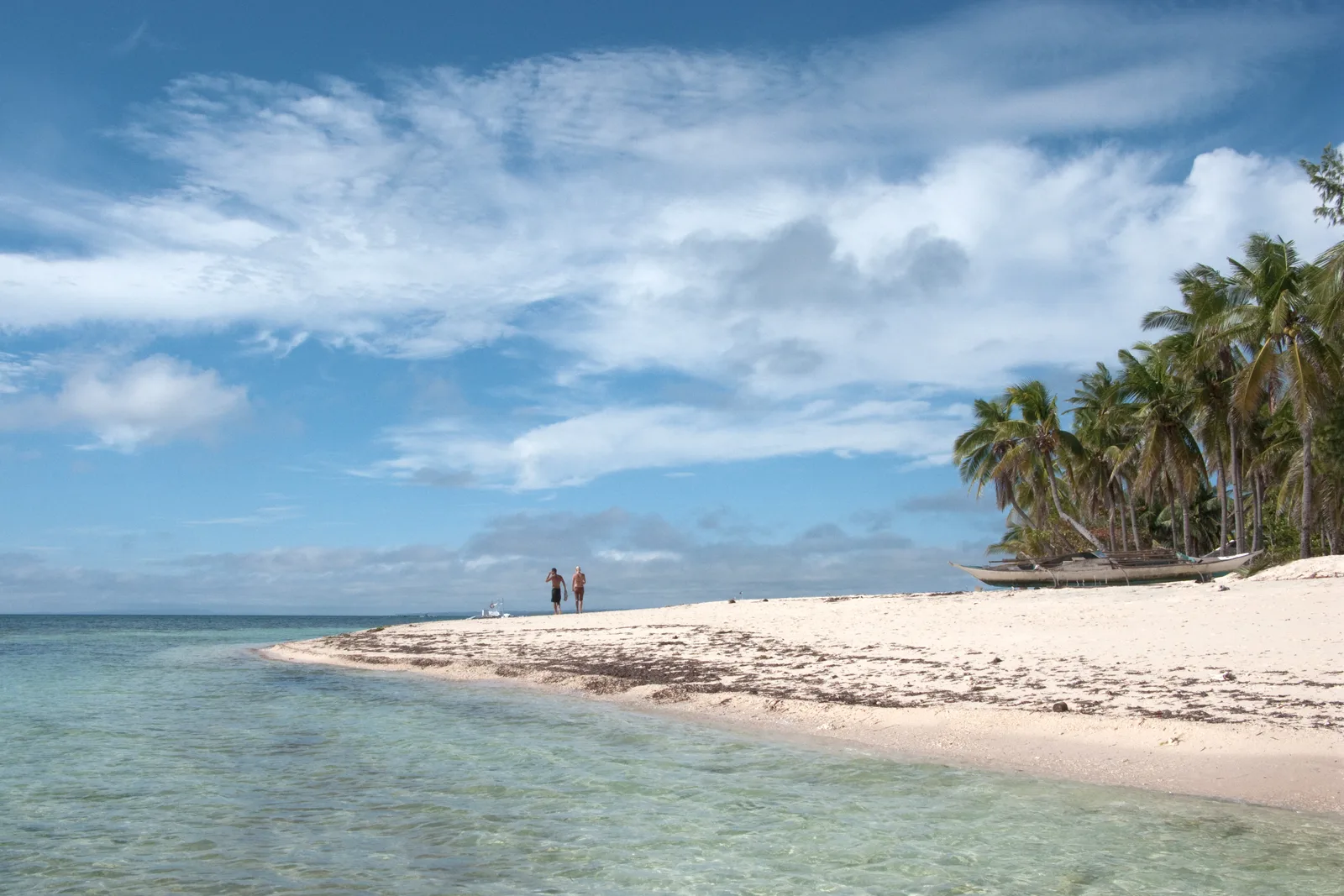
Bantayan Island, reached by a Ceres bus and ferry via Hagnaya in the north-west, is a slow, flat, powder-white-sand escape that many people use as a two-or-three-night unwind. Malapascua, off the northern tip via Maya, pairs a beautiful main beach (Bounty Beach) with the diving. Closer to the south coast, the Sumilon sandbar off Oslob and the laid-back Camotes Islands off the east coast round out the options. Because these all involve a long drive to a port plus a boat, they reward staying overnight rather than day-tripping.
The city: heritage, temples and views
Cebu City itself is compact and easy to see in a day or two, and it is the oldest city in the country, so the history is real.
Spanish-era heart
Magellan’s Cross, the Basilica del Santo Nino and the coral-stone Fort San Pedro sit within walking distance downtown and tell the story of the 1521 landing and the city that grew from it.
Hilltop views and temples
Up in the Busay highlands, the Temple of Leah, the Sirao flower garden and the Tops lookout give you cooler air and the city laid out below, an easy half-day by car.
Simala Shrine
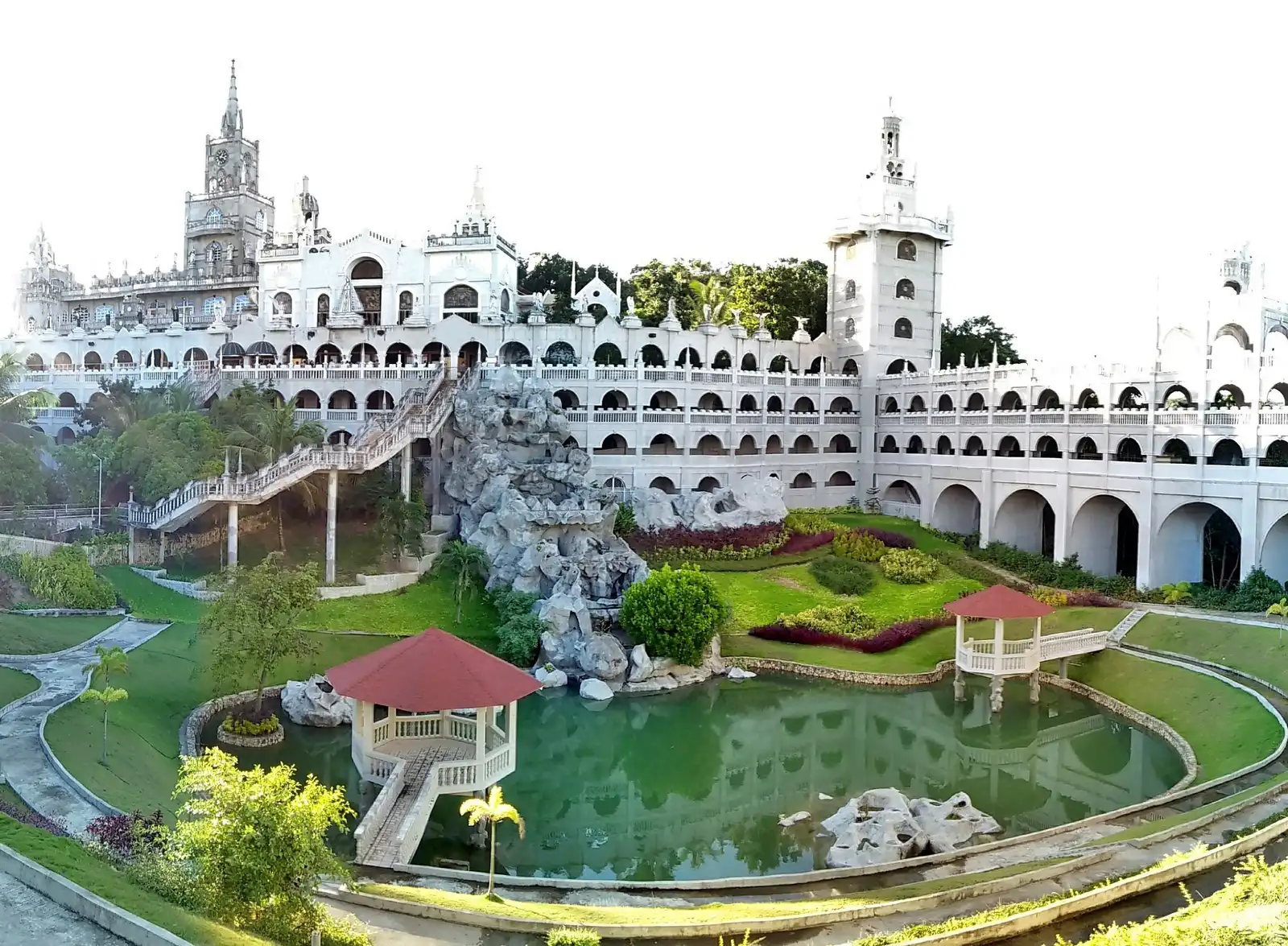
The castle-like pilgrimage church in Sibonga, about two hours south, is one of the most striking buildings in the province and a common stop on the way to or from Oslob.
Markets and malls
For a rainy afternoon or last-day shopping, the big Ayala and SM malls and the Carbon and taboan (dried-fish) markets are all central.
Food: what to eat in Cebu
Cebu is a genuine food destination, and eating well here needs no fabricated recommendations, just the local staples.
Lechon
Cebu’s whole roast pig is widely considered the best in the Philippines, crisp-skinned and seasoned so it needs no sauce. It is the one thing almost everyone tells you to try.
Seafood and grilled fare
Fresh seafood, grilled to order at seaside eateries and markets, is everywhere along the coasts; the taboan market is famous for danggit (dried fish) to take home.
Sweets and coffee
Local snacks like dried mangoes, budbud (sticky rice) and a growing specialty-coffee scene in Cebu City and the highlands round out a food-led day.
How many days, and how to group it
Because the sights are spread out, the smart move is to cluster by area rather than dart back and forth. A rough sizing:
Three to four days lets you pick one big south-coast day (for example Oslob plus Kawasan, or the Moalboal sardine run) alongside the city and highlands. Five to seven days is the sweet spot: a couple of long south-coast days, the city, and time to add either a northern island (Bantayan or Malapascua) or Osmena Peak. With seven-plus days you can do the south, a northern island and the city without rushing, or fold in a ferry hop to Bohol or Dumaguete. Our separate itinerary guide lays out day-by-day 3, 5 and 7-day plans if you want a ready-made framework.
Getting between the highlights
The single practical thing that makes a Cebu trip flow is sorting the transport, because the best experiences are long drives apart and the early slots (whale sharks, canyoneering, Osmena sunrise) reward an early, comfortable start.
You can do all of it by public transport, Ceres buses south and north, vans and habal-habal motorbike taxis for the last stretch, and it is cheap. But for the big days out, a private car and driver is what most visitors choose: you leave before dawn without waiting for a bus, pair two sights in a single day with the vehicle waiting, and come out of the canyon or off the boat to a ride that is already there. Tell us your dates, group size and the experiences on your list, and we send one fixed all-in price for the driving, no meter and no per-person maths.
Frequently asked questions
Is Cebu worth visiting?
Yes. Few places pack this much variety into one province: whale sharks, the Moalboal sardine run, canyoneering to Kawasan Falls, white-sand islands in the north, a mountain sunrise at Osmena Peak, and a historic city with the country’s best lechon. The main thing to plan for is distance, since the headline sights are a couple of hours from the city, so give yourself five to seven days and group them by area.
What is the number one thing to do in Cebu?
There is no single answer, but the two most-booked experiences are swimming with whale sharks in Oslob and canyoneering to Kawasan Falls, both on the south coast and often done on the same trip. If you prefer something free and shore-based, the Moalboal sardine run and sea turtles are hard to beat.
How many days do you need in Cebu?
Three to four days covers one big south-coast day plus the city; five to seven days is the sweet spot, letting you combine the south coast, the city and highlands, and a northern island or Osmena Peak. Seven or more days adds a relaxed island stay or a ferry hop to Bohol or Dumaguete. See our Cebu itinerary guide for day-by-day plans.
Is Cebu good for families or non-swimmers?
Yes. Alongside the adventure activities there are gentle options: the Kawasan Falls swim-and-raft visit without the canyoneering, the calm shallows and white sand of Bantayan, the city’s heritage sites and highland temples, and easy beach resorts on Mactan near the airport. Whale-shark snorkelling uses life jackets, and boats and guides are used throughout.
Do I need a car to see Cebu, or can I use public transport?
You can see everything by Ceres bus, van and habal-habal motorbike taxi, and it is inexpensive. But because the top sights are long drives from the city and the best time slots are early, most visitors use a private car and driver for the big days out, to leave before dawn, pair two sights in a day, and avoid bus timetables. We quote the vehicle and driver as one fixed price.
Should I visit Cebu or Bohol and Boracay?
They complement each other. Cebu is the best all-rounder, with wildlife, adventure, islands, city and food in one province, and it is the natural hub with the international airport and ferries. Bohol (the Chocolate Hills and tarsiers) is a short ferry or drive-and-boat away and pairs well as an add-on, while Boracay is a separate flight and is purely about the beach. If you want variety in one trip, Cebu is the strongest base.