
Oslob whale sharks: an honest how-to guide (timing, rules and ethics)
How do I see the whale sharks in Oslob, and is it ethical?
Short answer
The whale sharks are at Tan-awan in Oslob, on Cebu’s far south coast, about a three-hour drive from Cebu City. Watching runs only in the morning, from 6am to about noon, and sightings are near-guaranteed because the sharks are hand-fed by licensed fishermen. That daily feeding is exactly why the activity is ethically debated: research shows it changes the animals’ natural behaviour. Rules are strict (no touching, keep four metres back, no sunscreen, 30 minutes in the water), and the honest wild alternative is Donsol in Sorsogon. Arrive by 6-7am for the calmest water and smallest crowd.
Swimming with whale sharks in Oslob is one of Cebu’s most famous experiences, and also its most debated. In the small coastal barangay of Tan-awan, licensed fishermen hand-feed the sharks each morning, which is why you are all but guaranteed to see them within arm’s reach, and why marine conservationists have questioned the practice for years. This guide lays out both sides honestly so you can decide for yourself, then covers the practical part: when to go, the rules, and how to get there.
The logistics matter here more than for almost any other Cebu trip, because the encounter only happens in the morning and Tan-awan is a long drive south. The single biggest factor in a good visit is arriving early, before the crowds and the wind pick up. That is the part we handle: tell us your dates and we send a fixed-price quote for a private car and driver who collects you before dawn and has you at the water for the first slot.
The quick version
If you only remember a few things about Oslob, remember these.
Where
Barangay Tan-awan in Oslob, on Cebu’s far south-east coast, roughly three hours (about 130km) from Cebu City and a little more from Mactan airport.
When
Mornings only, about 6am to noon, every day. There are no afternoon sessions, so an early start is essential and a pre-dawn pick-up is normal.
Sightings
Effectively guaranteed year-round, because the sharks are fed daily. This is the source of both the appeal and the ethical controversy.
The catch
The feeding is criticised by marine scientists for changing the sharks’ natural behaviour. If a truly wild encounter matters to you, consider Donsol in Sorsogon instead.
Where it is and how the encounter works
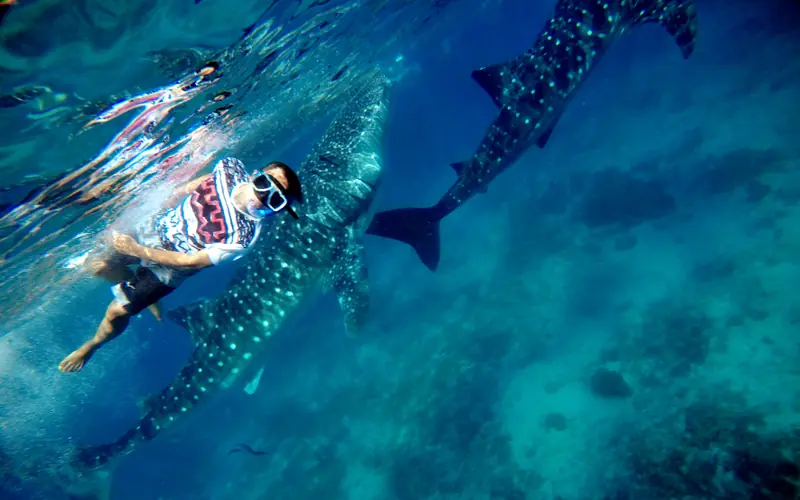
The whale-shark watching happens off the beach at Tan-awan, a few kilometres south of Oslob town proper. After a short safety briefing you go out in a small, non-motorised paddle boat a short way from shore, where the fishermen feed the sharks small shrimp (locally called uyap) from other boats. You can either watch from the boat or snorkel, and divers can go down with an operator. Because the sharks come in for the feeding, encounters are close and reliable rather than a matter of luck.
It is a busy, well-organised operation rather than a wilderness experience: expect a crowd, numbered slots, and a strict 30-minute limit in the water. That structure is part of why it works logistically, and part of why some travellers find it feels more like a managed attraction than a wild encounter.
When to go: time of day and time of year
The time of day you arrive matters far more than the month. Whale sharks are present all year because of the feeding, but the crowd, the water conditions and the quality of your encounter change hour by hour.
6-7am (best)
The smallest crowd, the calmest and clearest water, and your best chance at a relaxed encounter. This is what the early start is for.
7-9am
Still manageable, but more boats and swimmers are in the water and the queue for your slot grows.
9am to noon
Peak crowds and choppier water, with shorter effective time once you account for the wait. Registration typically closes around late morning.
Time of year
The dry season (roughly December to May) brings calmer seas and easier driving; the wetter months are greener and quieter, with a private car keeping you comfortable and flexible between showers.
The rules (and why they exist)
Oslob’s local ordinance sets firm rules to reduce stress and injury to the sharks. They are enforced in the briefing, though in practice not everyone follows them, which is part of the conservation concern.
No touching, ever
Contact damages the shark’s protective mucus layer and is strictly prohibited.
Keep your distance
Stay at least four metres from the body and a bit more from the tail. A study found most tourists came closer than allowed, so give the animals real space.
No sunscreen or insect repellent
Chemicals harm the sharks and the water. Rinse off beforehand and cover up with a rash guard instead.
No flash, no chasing
No flash photography, and do not swim after or block a shark. Let it move naturally, and only enter the water at your allotted time.
The ethics question, honestly
We would rather you go in with eyes open than sell you a fantasy. The core issue is the daily hand-feeding. A peer-reviewed study by the Large Marine Vertebrates Research Institute Philippines (LAMAVE), published in Royal Society Open Science, monitored the Oslob sharks and found their behaviour had measurably changed: they learned to associate boats and people with food and began arriving earlier at the feeding site. Researchers also recorded that the great majority of tourists breached the minimum-distance rule, and there are wider worries about dependency on feeding, disruption to natural movement, and injury from boat contact.
There is a genuine other side. The operation gave a former shark-fishing community a stable, non-extractive livelihood, and the fees fund the local sanctuary and community. Many marine biologists still argue that a fed, crowded encounter is not the same as seeing a wild animal on its own terms. Our honest position: Oslob is reliable and easy, but if a wild, non-feeding encounter matters to you, Donsol in Sorsogon (a seasonal, plankton-driven aggregation with no feeding) is the ethical benchmark, and supporting groups like LAMAVE or WWF Philippines is a good counterweight either way. We will take you to Oslob if that is your choice, without judgement, and make the logistics painless.
What to bring and how to prepare
A rash guard, not sunscreen
Since sunscreen is banned, bring a long-sleeve rash guard or swim shirt for sun protection in the water.
Your own mask if you can
Basic gear and a life jacket are provided, but a well-fitting mask of your own makes the 30 minutes far better. Life jackets mean non-divers and weak swimmers can take part.
A little cash
There is a set local fee paid on the day, with different rates for watching from the boat, snorkelling and diving. Bring pesos, as card facilities are limited; we do not quote or collect this fee, it is paid to the local operation on arrival.
An action camera, no flash
A GoPro-style camera on a float strap works well. No flash, and never use it as a reason to crowd a shark.
What to combine it with
Because it is a long way south and you are usually finished by mid-morning, most people pair Oslob with another stop on the same day or an overnight further along the coast. Popular combinations, all reachable with the same driver:
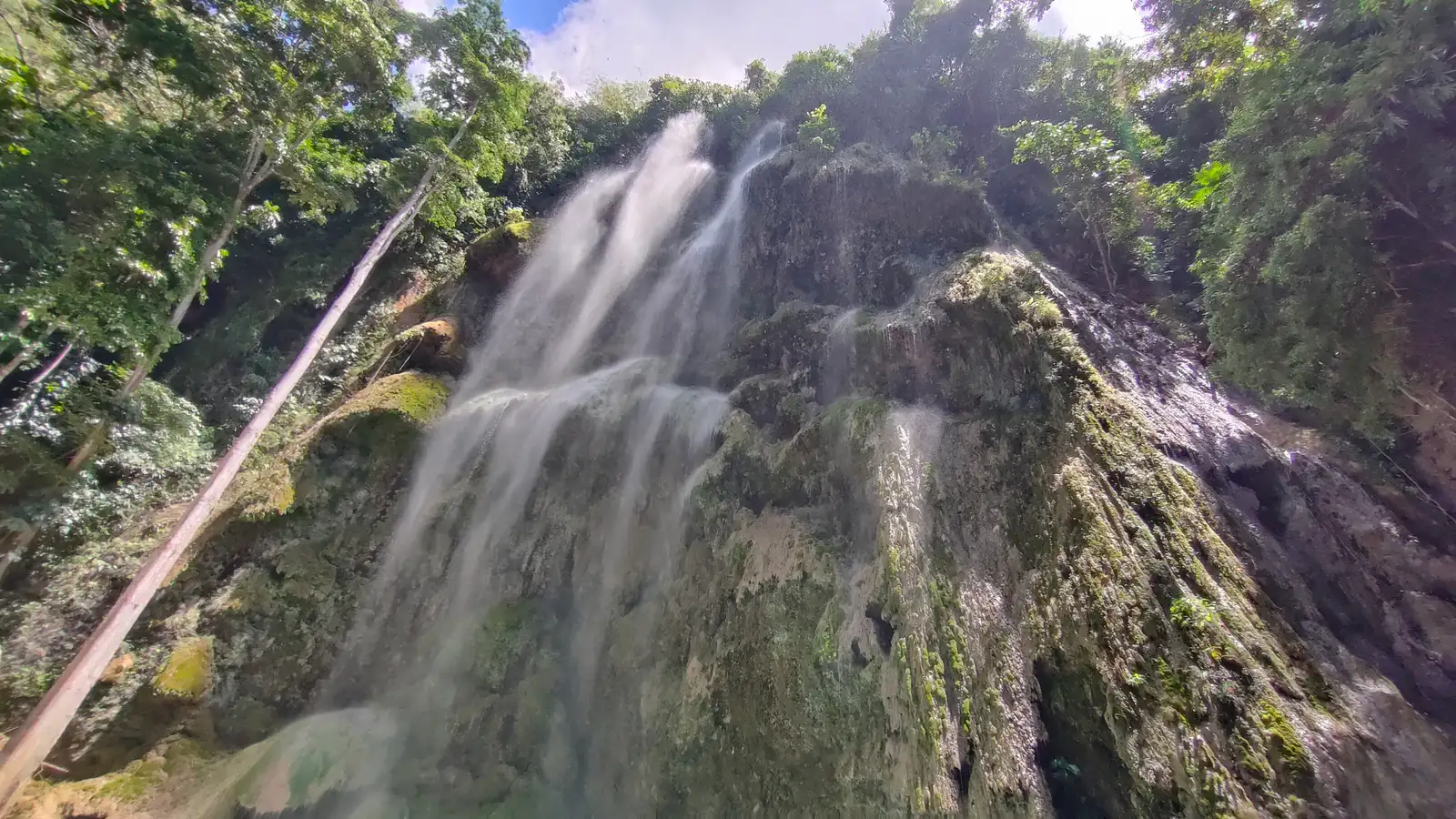
Tumalog Falls
A short ride from Tan-awan, a soft, curtain-like waterfall that is the natural add-on right after your swim.
Sumilon Island sandbar
A shifting white sandbar and clear water for a swim, a short boat hop off Oslob - though the island is privately run, so the boat is scheduled and the day pass is booked ahead.
Kawasan Falls (Badian)
The turquoise falls and canyoneering are further west along the coast; doable as a big day paired with Oslob, or better as an overnight on the south coast.
Moalboal
The sardine run and turtles make a natural next base if you are staying south rather than returning to the city.
Getting there, and why the early start rules everything
From Cebu City the drive to Tan-awan is roughly three hours down the coast road; from Mactan airport a little longer. Because watching stops around noon and the best window is 6-7am, you are looking at a very early departure whichever way you travel. You can do it by public transport, a Ceres bus from the Cebu South Bus Terminal towards Oslob or Bato, then a short tricycle to Tan-awan, which is cheap but slow and rigid, and getting a pre-dawn bus with the timing right is the hard part.
This is the classic case for a private car and driver. We collect you before dawn from your hotel, drive you straight to the water for the first slot, wait while you swim, and then loop in Tumalog Falls, Sumilon or Kawasan on the way back, on your schedule rather than a bus timetable. It is one fixed, all-in price for the vehicle and driver, with the whale-shark fee paid locally on the day. Tell us your dates and where you are staying and the quote is free with no obligation.
Frequently asked questions
Can I come from Bohol or Panglao for the whale sharks, and get back the same day?
Yes, on the timetable, but it is a short morning with no margin. Apekop Travel runs one banca a day from Momo Beach on Panglao - boarding 5:00 AM, away at 6:30, into Quartel Beach in Oslob around 8:00 AM - and sells a day-return ticket. The only boat back boards at Quartel Beach at 11:00 AM, leaves at 11:30 and reaches Momo Beach around 1:00 PM, so you have about three hours ashore for the few kilometres to Tan-awan, registration, the briefing and your swim. There is no later sailing: miss it and you are staying the night. If you also want Tumalog Falls, or would rather not race the clock, stay a night in Oslob or carry on up the coast to Moalboal. We can meet the 8:00 AM arrival at Quartel Beach and run you to Tan-awan and back for the 11:00 AM boarding; tell us the boat in your quote request.
Is swimming with whale sharks in Oslob ethical?
It is genuinely debated. The sharks are hand-fed daily, which guarantees sightings but, according to peer-reviewed LAMAVE research, changes their natural behaviour, and most tourists get closer than the rules allow. On the other side, the activity replaced shark fishing with a stable local livelihood and funds the community and sanctuary. If a wild, non-feeding encounter matters to you, Donsol in Sorsogon is the more ethical alternative. We will take you to Oslob if you choose it and keep the logistics easy.
Are whale shark sightings in Oslob guaranteed?
Effectively yes, and year-round, precisely because the sharks are fed each morning and have come to gather at Tan-awan. That reliability is the main draw of Oslob compared with wild sites where sightings depend on season and luck, and it is also the reason the feeding is controversial.
What time should I arrive at Oslob?
As early as you can, ideally for the 6-7am opening. Early means the calmest, clearest water and the smallest crowd, so a better and longer-feeling encounter. Watching runs only until about noon with no afternoon sessions, and registration usually closes late morning, so a pre-dawn start from Cebu City is normal.
How far is Oslob from Cebu City and the airport?
Tan-awan in Oslob is about three hours (roughly 130km) south of Cebu City along the coast road, and a little longer from Mactan-Cebu airport. Combined with the morning-only hours, that distance is why most visitors either leave the city before dawn with a private driver or stay a night nearby in Oslob or Alcoy.
Can non-swimmers or children see the whale sharks?
Yes. Life jackets are provided, so weak swimmers and children can take part with an adult, and you can also simply watch from the boat without getting in the water. The 30-minute limit and the four-metre distance rule apply to everyone.
Why is sunscreen banned, and what should I wear instead?
Sunscreen and insect repellent wash off in the water and harm the sharks and the marine environment, so they are prohibited. Rinse any off before you go in and wear a long-sleeve rash guard or swim shirt for sun protection instead.
What can I combine with the Oslob whale sharks?
Because you finish by mid-morning, most people add a nearby stop: Tumalog Falls is about 3 km away (the final approach is too steep for a car, so the last leg is a habal-habal or a steep 10-minute walk each way), the Sumilon Island sandbar is a short boat hop but has to be booked ahead (the island is private, and the resort boat that pairs with an early swim leaves Bangcogon at 10:00 AM), and Kawasan Falls in Badian is further west along the coast. With a private driver you can chain these on the way back on your own schedule, or continue to Moalboal instead of returning to the city.
How do I get to Oslob for the early slot?
You can take a Ceres bus from the Cebu South Bus Terminal towards Oslob or Bato and a tricycle to Tan-awan, which is cheap but slow and hard to time for a pre-dawn arrival. The comfortable option is a private car and driver who collects you before dawn, gets you to the first slot, waits, and adds Tumalog or Sumilon on the way back. We quote one fixed price; the whale-shark fee is paid locally on the day.