
Moalboal sardine run and turtles: how to get there and what to expect
How do you get to Moalboal from Cebu, and how do you see the sardine run and turtles?
Short answer
Moalboal is a small town on Cebu’s south-west coast, about 90 kilometres from Cebu City, and it is home to one of the most reliable snorkelling spectacles in the Philippines: a permanent “sardine run”, a swirling wall of millions of fish that sits just off Panagsama Beach, close enough that you swim straight out to it from shore with no boat needed. Green sea turtles graze the same shallows most days. The drive from Cebu City is roughly two-and-a-half to three hours by private car (a little longer and about 100 kilometres from Mactan-Cebu Airport, including the bridge off Mactan), or three to four hours by public Ceres bus. Because it is snorkel-from-the-shore rather than a scheduled boat, Moalboal works beautifully as a day trip, and it pairs naturally with a Pescador Island boat or Kawasan Falls an hour further south.
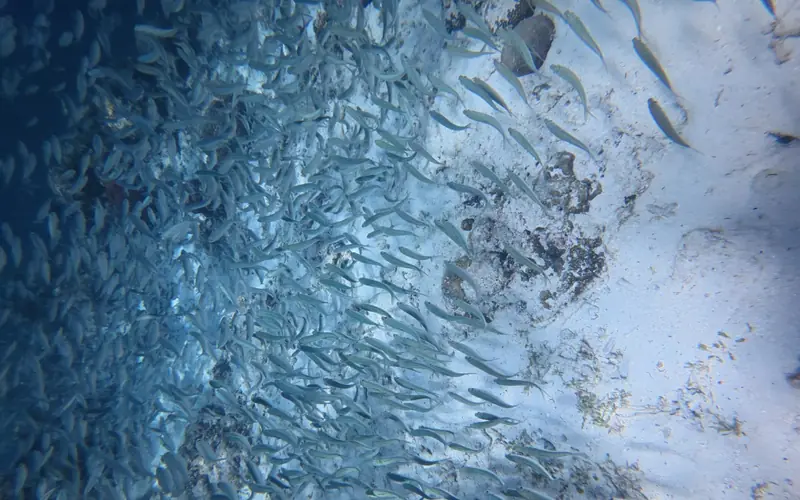
Moalboal is a small town on Cebu’s south-west coast that draws snorkellers and divers from all over the world for one simple reason: a huge, permanent shoal of sardines lives just off its shore. Swim a short way out from Panagsama Beach and you meet a wall of a million fish that bends and folds around you like liquid silver, and unlike almost every other marine encounter in Cebu, you do not need a boat, a permit or a pre-dawn start to see it. Green sea turtles graze the seagrass in the same shallow stretch, often within a fin’s reach.
That accessibility is what makes Moalboal so easy to plan around. It is a comfortable half-day drive south of the city, the sardines are there year-round, and you swim to them straight off the beach, so it fits a single day out as neatly as an overnight. This guide covers how you actually get there, what the sardine run and turtles are really like, the boat trips and beaches worth adding, and how to decide between a day trip and staying over.
Where Moalboal is, and how you get there
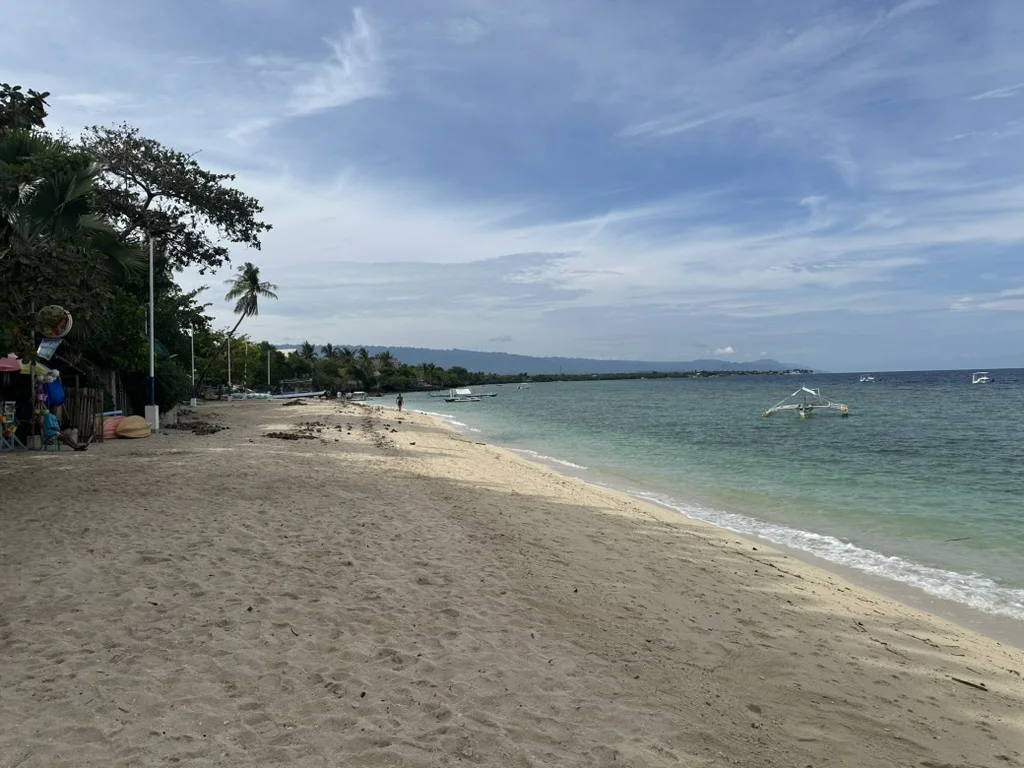
Moalboal sits on the south-west coast of Cebu, about 90 kilometres from Cebu City down the western coastal road. The snorkelling happens at Panagsama Beach, a small strip of dive resorts and restaurants just outside the town proper, while the sandy swimming beach, White Beach (Basdaku), is a few kilometres further north.
By private car the drive from Cebu City is roughly two-and-a-half to three hours; from Mactan-Cebu Airport it is a little longer, closer to three to three-and-a-half hours and about 100 kilometres, because you first cross the bridge off Mactan and skirt the city. Traffic getting out of Cebu City is the main thing that stretches the time, so an early start helps.
On public transport, take a Ceres Liner bus marked “Bato via Barili” from the Cebu South Bus Terminal on Natalio Bacalso Avenue, not “Bato via Oslob”, which loops the other way around the island and takes far longer. The bus runs about three to four hours with frequent stops; shared V-hire vans cover the same route a little quicker but with fixed seats and luggage limits. Either drops you on the highway at Moalboal town, from where a short tricycle ride takes you down to Panagsama or White Beach.
The sardine run and the turtles
The sardine run is the reason most people come, and the remarkable thing about it is how ordinary it is to reach: there is no boat and no ticket, you simply wade in off Panagsama Beach, swim out a short way over the drop-off, and the shoal is there. It is a permanent baitball, meaning the fish live here all year rather than passing through on migration, so it is one of the few genuinely reliable wildlife sights in Cebu. On a good day the shoal is so dense it blocks the sunlight and moves like a single living thing.
Green sea turtles feed on the seagrass in the same shallow zone and are used to swimmers, so it is common to see them grazing or surfacing for air close by. The best light is usually mid-morning, when the sun angles into the bait ball and turns the whole wall silver; go too early or too late and it can look grey. It is a free shore snorkel, so all you pay for is optional extras (gear rental, a guide, or a boat out to Pescador), arranged locally.
Pescador Island, White Beach and what else to do
The sardines and turtles fill a morning, but Moalboal rewards a full day or an overnight, and there is plenty to add either side of the shore snorkel.
Pescador Island
A short banca (outrigger) ride offshore to a small marine sanctuary ringed by walls and a famous cavern nicknamed the “sardine cathedral”. Snorkellers get clear water and reef, and divers often meet turtles and, in season, thresher sharks. Boats are arranged locally at Panagsama.
White Beach (Basdaku)
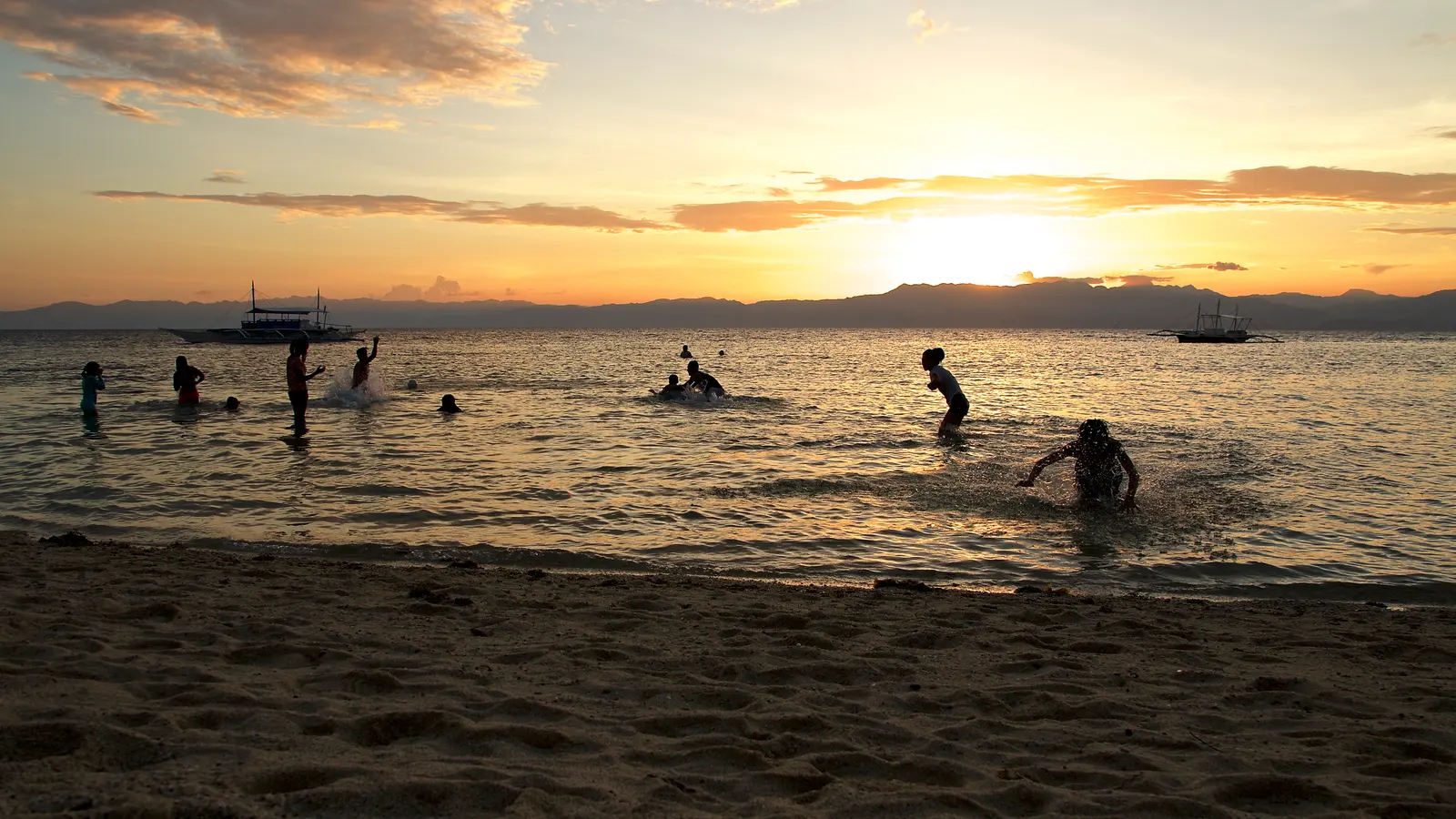
A separate, proper sandy swimming beach a few kilometres north of Panagsama, better for families, sunbathing and sunsets than the dive-resort shoreline of Panagsama itself.
Kawasan Falls, an hour south
The turquoise waterfalls at Badian, and the canyoneering route above them, are only about an hour further down the coast, so many visitors pair Moalboal with Kawasan into one big south-coast day or a two-day loop.
Diving and freediving
Panagsama is a long-established dive and freedive base, with wall dives, turtles and the sardines themselves as an easy check-out dive. Several schools run courses if you want to learn here.
Day trip or overnight, and combining it
Because you snorkel straight from shore, Moalboal is one of the easiest Cebu highlights to do as a day trip: with an early private departure you can be in the water with the sardines and turtles by mid-morning, have lunch on the beach, and be back in the city the same evening. That is the most popular way people do it.
Staying a night, though, opens up the rest: an early Pescador Island boat before the day-trippers arrive, an afternoon at White Beach, a Kawasan run the next morning, or simply a slower pace than a there-and-back day allows. If you are combining Moalboal with Oslob’s whale sharks or Kawasan canyoneering, an overnight in the south saves you doubling back to the city in between, because the roads down here link Moalboal, Badian and Oslob along the same southern coast.
Best time, and getting there without the stress
The sardines are there year-round, so there is no wrong season for the headline act. What changes is the sea and the sky: the driest, calmest, clearest months are roughly February to May, while the second half of the year is wetter and can bring the odd grey day or choppier water for the Pescador boat. Whenever you go, aim to be snorkelling mid-morning for the best light, and bring reef-safe sunscreen, because the shoal is metres from shore, so you will stay in the water far longer than you planned.
The one variable you cannot control on public transport is timing: buses stop often, and getting the right “via Barili” bus and then a tricycle down to the beach eats into a day trip. A private car and driver takes that out of it: a door-to-door run from your hotel or the airport, an early start to beat the traffic and the mid-morning light, your driver waiting while you swim so the day runs on your clock, and the option to fold in Pescador, White Beach or Kawasan on the same trip. Tell us your dates, your group size and your pickup, and we send one fixed all-in price for the driving.
Frequently asked questions
How do you get to Moalboal from Cebu?
By road down Cebu’s west coast. It is about 90 kilometres and two-and-a-half to three hours by private car from Cebu City, or roughly 100 kilometres and three to three-and-a-half hours from Mactan-Cebu Airport including the bridge off Mactan. By public transport, take a Ceres bus marked “Bato via Barili” from the Cebu South Bus Terminal (about three to four hours), then a tricycle down to Panagsama or White Beach.
Do you need a boat to see the sardine run?
No. The sardine run is a free shore snorkel: you wade in off Panagsama Beach and swim a short way out to reach the shoal, with no boat, ticket or guide required. You only pay for optional extras such as gear rental or a boat trip out to Pescador Island, arranged locally.
Can you see the Moalboal sardine run and turtles on a day trip?
Yes. With an early private departure you can snorkel the sardine run and the turtles off Panagsama and still be back in Cebu City the same evening. Many visitors add a Pescador Island boat, and some fold in Kawasan Falls an hour further south, which is where an overnight starts to make sense.
When is the best time to visit Moalboal?
Year-round for the sardines, which live off Panagsama permanently rather than passing through on migration. The driest, calmest and clearest conditions generally fall between February and May; the wetter second half of the year can bring choppier water and the odd grey day. Aim to be in the water mid-morning, when the light turns the bait ball silver.
Are there turtles at Moalboal, and are they wild?
Yes. Green sea turtles graze the seagrass beds in the shallows off Panagsama, in the same stretch of water as the sardine run, and they are wild and free-swimming, not fed or corralled. They are used to snorkellers, so sightings are common, but keep a respectful distance and never touch or chase them.
What else is there to do in Moalboal?
Beyond the shore sardine run and turtles, a short banca ride reaches Pescador Island, a marine sanctuary with walls and the “sardine cathedral” cavern. White Beach (Basdaku) a few kilometres north is the sandy swimming and sunset beach, Panagsama is a well-known dive and freedive base, and Kawasan Falls at Badian is only about an hour further south, so the two pair easily.